



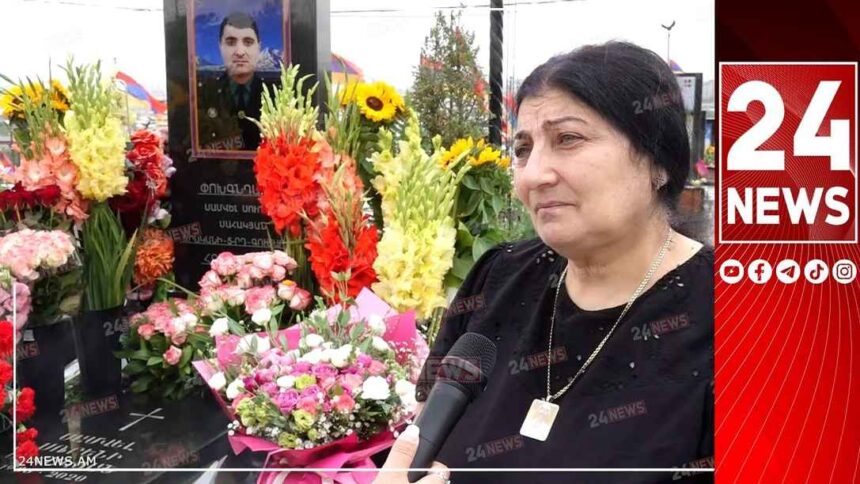
The mother of a fallen soldier has said that her son was shot from behind, and that the doctor said he was shot in the back to kill him. According to her, it was a conspiracy. The statement was made on September 29 in Yerevan in an interview with 24News, where issues related to the reforms underway in Armenia's Armed Forces were also discussed.
On the same day, a number of regional and international topics were also in focus. Turkey, Azerbaijan and Georgia discussed customs cooperation issues, while Armenia's embassy in Russia will temporarily suspend its passport issuance service.
In the political field, Artak Zakaryan stated that the policy of "sitting on several chairs at once" is coming to an end. Arpine Hovhannisyan noted that the opposition does not have very strong grounds to be satisfied with the PACE report.
Sarik Minasyan recalled that when conscripts were being taken from Shirak to Karabakh, parents were plunged into mourning. On the topic of Gyumri, the idea was also voiced that it was not Vardan Ghukasyan who lost, but four forces, and that a governance crisis may be possible in Gyumri.
Other issues were also raised during the day: "Past" wrote about whether Pashinyan wants the Genocide to be forgotten, the Artsakh resident who behaved insolently toward a 24News journalist owes the fund 15 million drams, and on September 27 there were four Azerbaijani cars in the yard, where they said "не бойтесь", we won't do anything to you.
Criticism directed at Khachatur Sukiasyan was also voiced, noting that he resembles Nikol, is unbalanced like him, and that the Artsakh resident is being turned into an "enemy".

This statement is difficult to leave indifferent, but it is necessary to clearly distinguish emotion from fact. The mother says what the doctor told her, and that is a serious accusation that demands an answer — not silence or a quick interpretation. If such a warning was indeed sounded, then it must be established who, when and under what circumstances recorded that fact.
At the same time, it should not be forgotten that on the same day the reforms of the Armed Forces, regional customs cooperation and the temporary suspension of the embassy's service were also discussed. Against this backdrop, any uncertainty surrounding the circumstances of the serviceman's death attracts greater attention than in an ordinary case.
Many questions remain: whether this warning has been verified, what the official conclusion is, and how the reforms that should prevent such tragedies are proceeding. The answers will take time, but silence here is the worst option.