




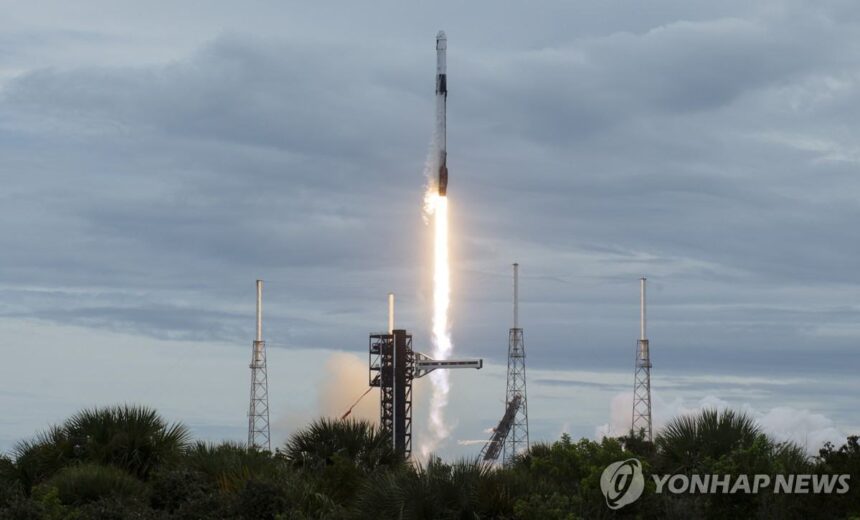
Google has launched a test satellite equipped with AI TPU chips into orbit aboard a SpaceX Falcon 9 rocket as part of Project Suncatcher. This marks the company's first major step toward building orbital data centers.
The satellite will remain in orbit for one year. During this period, specialists will closely examine how cosmic radiation affects chip performance and how effectively heat is dissipated in a vacuum.
In the future, Google plans to create a full constellation of satellites, enabling large-scale and complex AI tasks to be processed directly in space.
While the concept of orbital data centers might initially sound like science fiction, Google's experimental launch demonstrates that tech giants are taking the idea seriously.

On Earth, AI data centers consume massive amounts of electricity and water for cooling. In space, where solar energy is virtually unlimited, this challenge could be approached entirely differently—provided the issue of chip heat dissipation can be resolved.
However, cosmic radiation poses a serious threat to sensitive electronics. The upcoming year of testing will help clarify whether establishing such networks is economically and technically viable.