




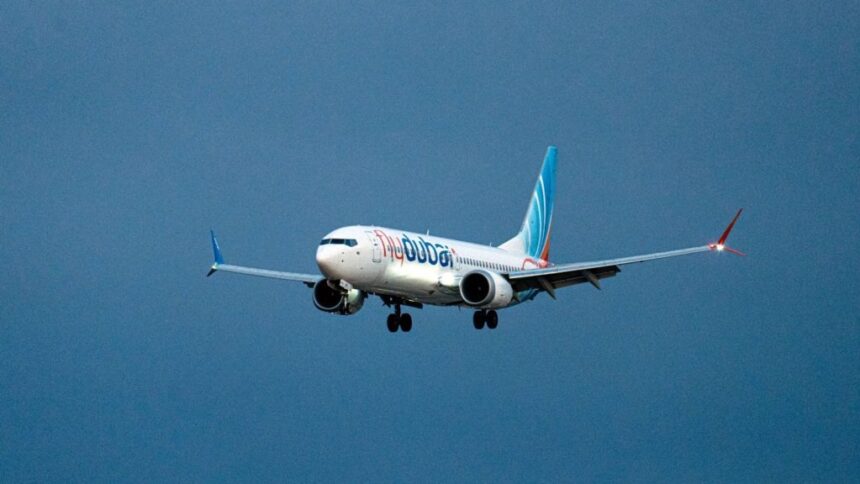
The United Arab Emirates prosecution authorities have established that the co-pilot of a Flydubai flight from Dubai to Tel Aviv attacked the captain with an emergency axe and attempted to take control of the aircraft. UAE Attorney General Hamad Saif Al-Shamsi said on October 3 that the attacker had attempted to carry out a terrorist attack.
The investigation is ongoing. Law enforcement authorities must establish the full circumstances of the incident, the attacker’s motives and any possible connections.
The co-pilot was flying from Dubai to Tel Aviv on September 30 on flight FZ1073 and had previously been removed from Oman’s Oman Air airline on security grounds. Extremist-related materials were found in his possession during an internship there in 2024.
According to sources familiar with the investigation, the suspect is 29-year-old Omani citizen Hamam Al-Hamami. After being removed from flight duties, he was allowed to continue working for Oman Air in an administrative position.
The aircraft made an emergency landing at an airport in the Saudi city of Tabuk after an alert about an attempted hijacking. During the struggle in the cockpit, the Boeing 737 MAX 8 descended from an altitude of 9,410 meters to 5,105 meters in just 29 seconds.
There were 174 people on board, including 27 children, most of whom were Israeli citizens. According to passengers, they initially heard screams from the cockpit, then the door opened and they saw the injured pilot with bloodstained clothing. One of the passengers was a doctor, while crew members and passengers managed to subdue the attacker.



The flight’s pilot, Indian citizen Smith Machchhar, was hospitalized in Saudi Arabia with injuries. During a video call with Narendra Modi, he said that after the attack he realized the aircraft was rapidly losing altitude and there was almost no time left. While injured, he crawled toward the door and managed to open it, after which others entered the cockpit. Modi described his actions as demonstrating courage, resilience and the ability to make quick decisions, which, he said, saved many lives.
What is particularly significant in this incident is that the danger arose not outside the aircraft but inside the cockpit itself, where every second could affect the course of the entire flight. The sharp loss of altitude within several dozen seconds shows how quickly the situation was unfolding, while there were 174 people on board, including 27 children.
The continuation of the investigation must now clarify not only the immediate course of the attack but also the co-pilot’s motives and possible connections. Particular attention is being paid to his previous employment history, as the information cited raises questions about how he was able to continue working for the airline in an administrative position after being removed from flight duties.