


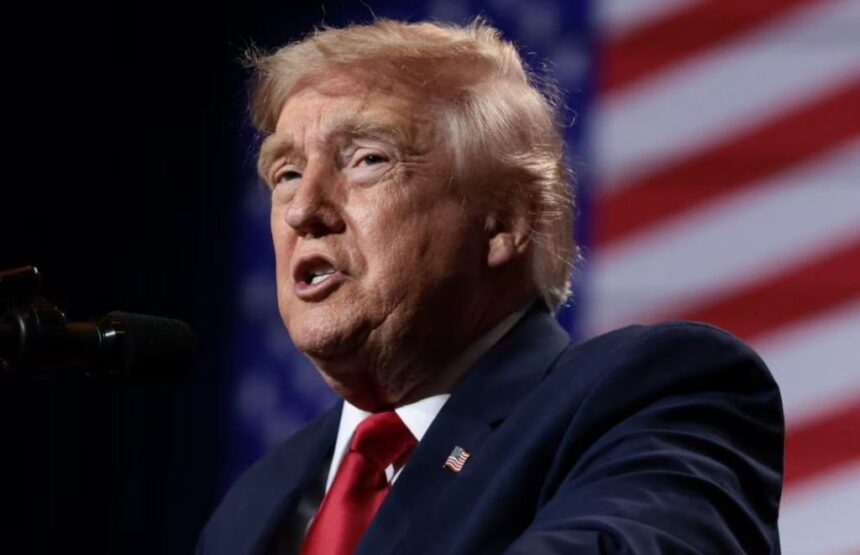
US President Donald Trump has put forward a new proposal, seeking to rename several more bodies of water, including the Atlantic or Pacific Ocean.
Speaking at a campaign rally in Clarksville, Tennessee, on Saturday, October 10, he declared that the United States needs its own great river and ocean. According to Trump, the new name could be linked to his own name, for example "Trump Ocean" or "Ocean of the Americas." Those present responded to his statement with laughter and thunderous applause. He also stressed that by the end of his term, the country should have its own ocean.
This is not the first such case. During his second presidency, Trump has repeatedly initiated renamings of major geographical features and structures. In January 2025, the Gulf of Mexico was renamed the Gulf of America, which sparked serious discontent in Mexico. The Mexican side recalled that the former name had been used in international navigation for centuries. In addition, Alaska's Denali mountain was given back the name McKinley.
Already in August 2026, Trump signed an executive order turning Lake Ontario into "Lake America." This move came amid the failure of a trade deal with Canada. Canadian Prime Minister Mark Carney sharply criticized the decision, noting that the name Ontario has a history of more than four centuries and existed long before the statehood of both countries.


The US president has the authority to change the official names of geographical locations. And private online mapping services have largely already adopted the new names set by Trump.
The renaming of geographical features has become for Donald Trump a tool for clear political influence and rallying his domestic audience. The precedents of the Gulf of Mexico and Lake Ontario showed that such decisions immediately turn into international diplomatic disputes, provoking discontent among neighboring countries.



In the case of international waters, the situation is different. While private maps change the names of features under US domestic jurisdiction, the world's oceans are beyond any single state's jurisdiction. This raises the question of to what extent such statements go beyond the framework of campaign rhetoric.