




US President Donald Trump has said that Russian President Vladimir Putin spent 10 years trying to resolve the conflict between Armenia and Azerbaijan but failed to achieve that goal. According to Trump, he managed to do so in just two days.
“I did it in two days,” the US president said in Syracuse, New York, while recounting the substance of his conversation with Putin.
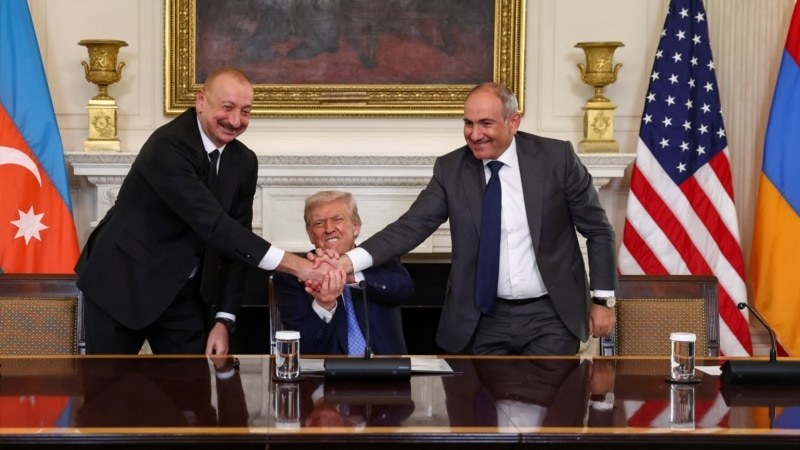
On August 8, 2025, representatives of Armenia and Azerbaijan initialed a peace agreement at the White House in the presence of the US president. The leaders of both countries described the document as historic, and subsequent statements suggested that peace between the two former adversaries had effectively been established.
However, the peace treaty has yet to be signed. Azerbaijan is demanding amendments to Armenia’s Constitution, claiming that it contains territorial claims against Azerbaijan.
Armenian authorities are drafting a new Constitution but insist that the process is unrelated to Baku’s demands. According to their position, amending the country’s fundamental law is an internal matter for Armenia.
Trump’s statement presents the Armenia-Azerbaijan peace process as his personal diplomatic achievement, contrasting it with Putin’s longstanding efforts. However, the two-day timeframe cited in the political statement does not, in itself, explain how the parties reached an agreement or the extent to which it has addressed the conflict’s underlying issues.


It is important to distinguish between the initialing of an agreement, its final signing, and the full implementation of its provisions. Statements about the establishment of peace between Armenia and Azerbaijan do not change the fact that signing the treaty remains an unresolved issue. Baku’s constitutional demand and Yerevan’s position demonstrate that significant disagreements persist in the negotiation process.
To assess future developments, what will matter is not only which leader claims credit for the achievement, but also whether the parties can reach agreement on the remaining terms. Without the treaty’s signing and implementation of its provisions, claims of a swift diplomatic success do not yet provide the full picture.