




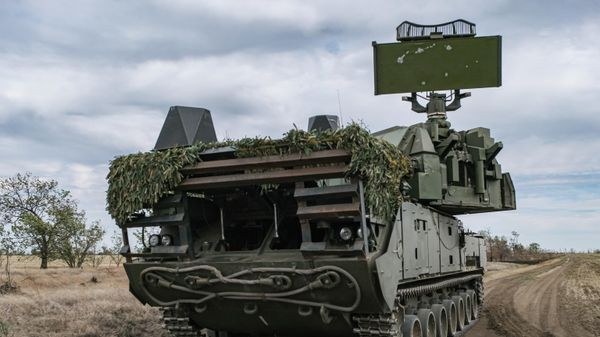
A massive air attack by Ukraine's Armed Forces has been repelled in Stavropol Krai. Governor Vladimir Vladimirov reported that drone debris caused some damage in the Nevinnomyssk industrial zone, but according to operational information, there are no casualties. "The massive air attack on Stavropol Krai has been repelled. Thanks to the air defense fighters, it was a very intense night for them," Vladimirov wrote on Telegram.
Moscow Mayor Sergei Sobyanin also reported a large-scale overnight attack. According to his data, from 20:30 on October 12 to 07:00 on October 13, 417 drones flew toward the Moscow region. Most of them were neutralized at distant approaches, and another 65 as they approached Moscow.
Kaluga Governor Vladislav Shapsha reported that in the Mosalsky district, a school building, two private houses and one car were damaged as a result of the overnight attack. No one was injured, and 73 drones were shot down in the region's skies during the evening and night.
Recall that in the early morning of February 24, 2022, Russian President Vladimir Putin announced his decision to launch a special military operation against Ukraine following a request for assistance from the LPR and DPR. Combat operations continue to this day, and Ukrainian forces regularly attack Russian border regions with various means, including drones, particularly the Belgorod, Bryansk, Kursk and Voronezh regions.
The figure of 417 drones flying toward the Moscow region, as published by Sobyanin, speaks volumes in itself: this is not an isolated incident but a large-scale operation lasting an entire night, most of which was neutralized at distant approaches. Therefore, when we speak of a "repelled" attack, it does not mean the threat was weak or insignificant; it simply means the defense layers worked before the targets were reached.
It is noteworthy that the geography of the damage spans different regions: Stavropol, the Moscow region, Kaluga. This shows that such attacks have long moved beyond the border zone and have become part of the daily life of Russia's deep regions, which further complicates the burden on the air defense system. In Kaluga's case, the damage to a school building and private houses is a reminder that even after a "neutralized" attack, debris can leave serious consequences for civilian infrastructure.


In the near future, it is worth watching whether such massive attacks will become regular, and how this will affect Russia's domestic air traffic and regional security measures. For now, all that is known is that there are no casualties, but the full picture of the damage is still being clarified.