




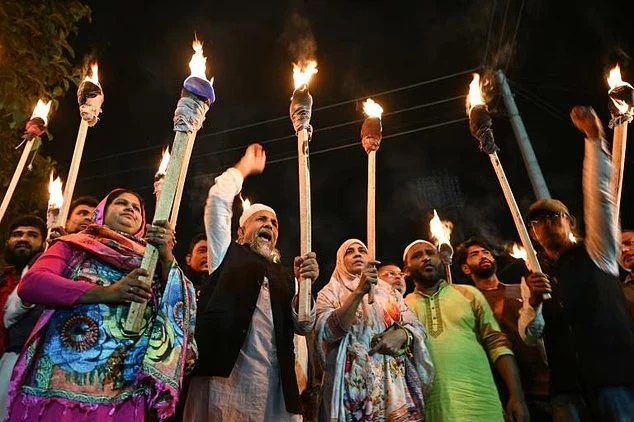
Residents of Gopalganj, the hometown of former Bangladeshi Prime Minister Sheikh Hasina, find themselves at the center of strict security measures and political violence ahead of her expected return in December. People report facing intimidation and fear arrest over alleged ties to the former leader. Tensions in Gopalganj, considered Hasina’s political stronghold, have not subsided since she announced her intention to return to the country, despite being sentenced to death in absentia in November on charges of crimes against humanity committed during the 2024 uprising.
Ahead of a major rally by Hasina’s supporters scheduled for Sunday, authorities have deployed hundreds of security personnel to the city and tightened surveillance. Residents complain that sweeping restrictions over recent months have severely disrupted their daily lives. According to authorities, supporters of the banned Awami League party have carried out at least 72 flash protests and more than 100 petrol bomb attacks across the country in recent weeks.
In response to these actions, security forces have launched wide-ranging security operations. Gopalganj has suffered heavy damage, with two police stations and several other buildings set on fire. Mobile banking services have been suspended, direct rail links with Dhaka have been halted, and police stations are effectively non-operational. Lawyer Jaber Alam, a former Awami League member, noted that locals are being treated like enemies, and hundreds of people have been jailed ahead of the February elections.
More than 100 branches of Grameen Bank, founded by former interim leader Muhammad Yunus, have also been targeted in arson attacks. Bank guard Zakir Biswas said the attackers linked the strikes to Yunus’s decision to demolish the house of Sheikh Mujibur Rahman, Bangladesh’s founding father and Hasina’s father. Banners welcoming Hasina’s return have been posted on Rahman’s mausoleum. Home Affairs Minister Salahuddin Ahmed described the incidents as sabotage, while residents fear for their safety.
The situation in Gopalganj demonstrates that the political crisis in Bangladesh has entered a phase of harsh confrontation, in which infrastructure and civilian facilities are also suffering. The suspension of rail transport and banking services has effectively isolated the city from the country's capital, Dhaka.
Notably, the violence is linked not only to the expected return in December or the February elections, but also to disputes over historical symbols. The connection between the demolition of Hasina’s father’s house and the arson attacks on the bank branches indicates that the conflict carries a deeply personal and symbolic subtext.



How the situation develops in the coming days will depend on the course of Sunday’s planned rally and the response of security forces. It remains unclear whether the authorities will succeed in restoring normal police operations and preventing a further escalation of clashes.