




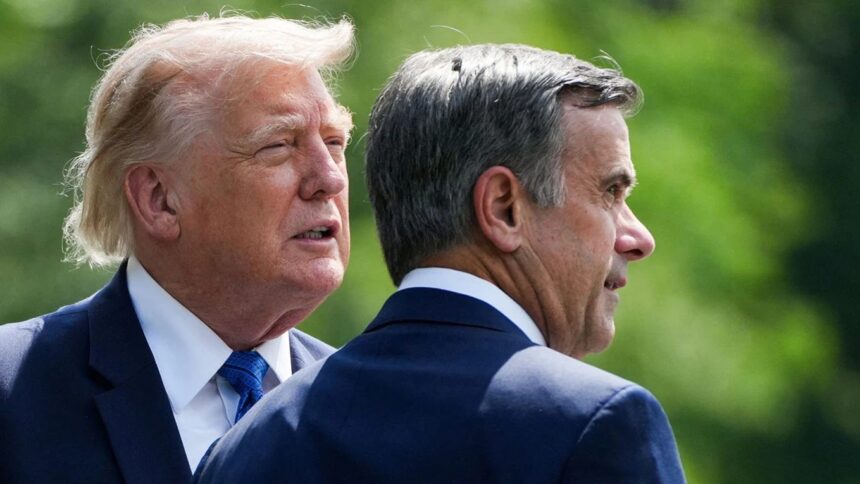
U.S. President Donald Trump personally sent CIA Director John Ratcliffe to Moscow for talks. The head of the White House did not inform even his trusted aides or military leadership in advance. As a result, they remained unaware of the specific message Ratcliffe was carrying to Russia.
In Moscow, the CIA director met with Alexander Bortnikov, head of the Federal Security Service. He presented a grim assessment of the frontline situation in Ukraine. Ratcliffe urged the signing of a war termination agreement before Russia's military and economic situation deteriorates further. Prior to this meeting, he had also negotiated with the Ukrainian side, assuring them that his trip to Moscow was to study their position, not to make concessions.
The CIA head arrived in Russia on an unannounced visit on August 25. The Kremlin initially claimed to know nothing about the American military aircraft landing at Vnukovo Airport. However, they later confirmed Ratcliffe's arrival, describing it as contact between intelligence services. Sergei Naryshkin, head of the Foreign Intelligence Service, also met with him to discuss matters within the jurisdiction of the intelligence agencies.
In addition, Ratcliffe warned representatives of Russian intelligence services against attacking NATO member states, specifically Estonia, Latvia, and Lithuania. He also urged Russia to refrain from providing military and economic support to Iran.

Trump described the visit as a routine working meeting. Nevertheless, upon returning to Washington, Ratcliffe attended a closed-door meeting at the White House alongside Defense Secretary Pete Hegseth and Chairman of the Joint Chiefs of Staff General Dan Caine. That meeting lasted approximately three hours.
This surprise meeting between the heads of U.S. and Russian intelligence services demonstrates that Washington is attempting to open direct backchannel avenues with Moscow. Notably, Trump bypassed a significant portion of his own military and diplomatic apparatus, indicating a highly centralized decision-making approach.



The messages directed at Russia regarding the potential worsening of the military situation in Ukraine and unacceptable moves toward NATO's eastern flank highlight the scope of the White House's concerns. It will become clear in the near future whether these warnings and proposals will have any impact on Russia's further calculations.