




In China's Inner Mongolia Autonomous Region, where coal mining reaches massive scales nationwide, former mining areas are undergoing an unprecedented ecological transformation, becoming arable for agriculture once again. A striking example of this transformation is the Jungar Banner Coal Mine Restoration Base, which demonstrates how former mining areas and agricultural landscapes can be converted into sites for environmental restoration, agricultural crop cultivation, and tourist destinations.
At this restoration base, hundreds of hectares of orchards have already been planted for apples, pears, grapes, and numerous other crops. The harvested produce is turned into juice and wine in adjacent factories, creating a new link in the production chain and providing additional socio-economic development opportunities for local businesses and the population. Located in the valley of the Yellow River—China's second-longest river—rice paddies and fish farms serve as another impressive example of agricultural transformation, as the soil in this area was previously unfit for crop cultivation due to severe salinity.
Technologies and ingenuity came to the aid of farmers, the problem was successfully solved, and extensive rice paddies now stretch across this area. Furthermore, not only is successful rice cultivation carried out, but fish, crayfish, and other aquatic life are raised in the field's water basins, which help combat weeds and pests on one hand and leave nutrient-rich waste on the other.
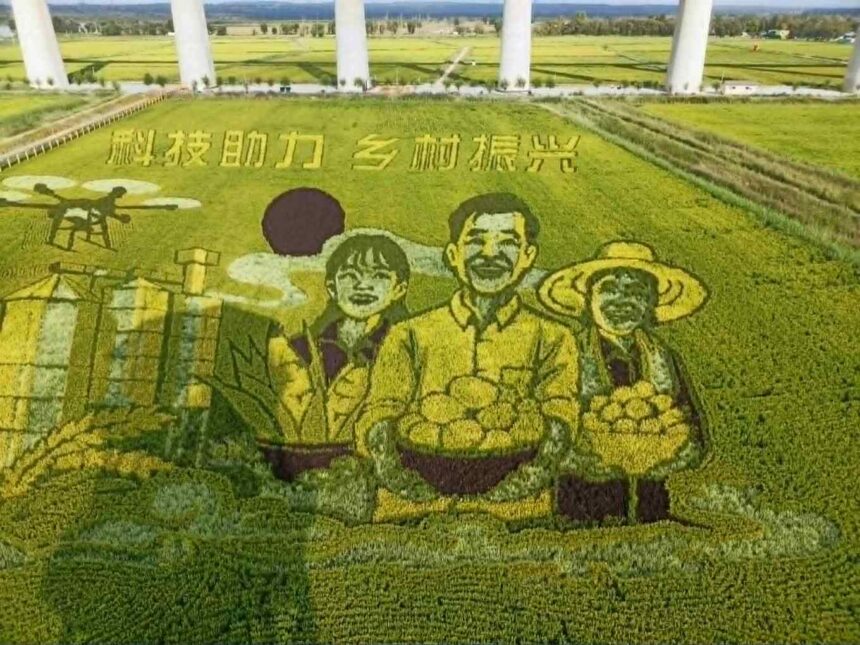
One of the most remarkable sights in the orchard is the artistic artwork of the colorful rice paddies, where seedlings of various colors have been planted and cultivated with such precision that the field has turned into a unique masterpiece of fine art. When viewed from a high observation tower specially built for this purpose, a magnificent view opens up as the rice plants merge together to create complex images and patterns with painterly precision.



The restoration of mining areas and breathing new life into them demonstrates how modern technologies and environmental approaches can change the fate of landscapes. This experience not only solves ecological problems but also creates new economic opportunities for local residents.
Such initiatives are an important step toward sustainable agriculture, where traditional methods are combined with innovative solutions. In the future, the expansion of similar programs could significantly alter the pace of agricultural and tourism development in such regions.