




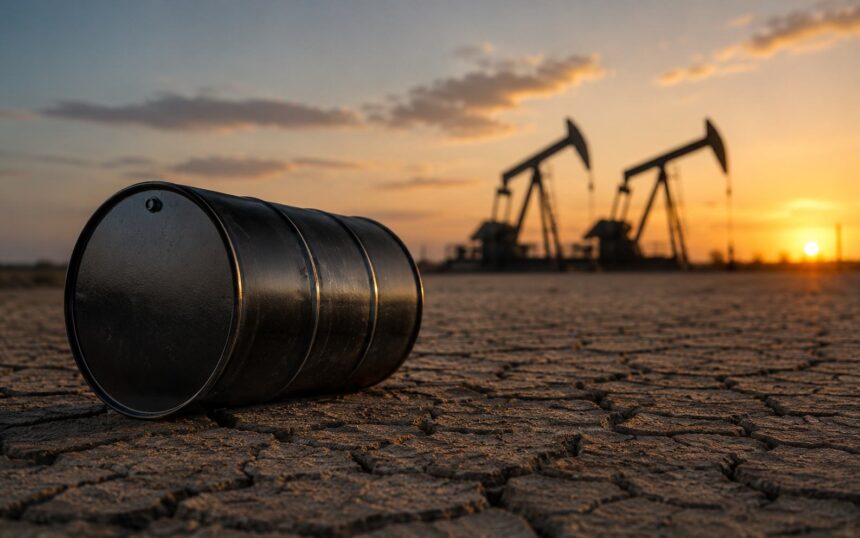
US strategic oil reserves have fallen to their lowest level since 1982 amid the war against Iran and a global shortage of energy supplies.
Last week, the reserve declined by more than 3 million barrels to 286.6 million barrels, or about 40% of the storage facility’s total capacity. The major disruption to global oil supplies has also pushed up gasoline prices in the US to more than $4 per gallon.
The Strategic Petroleum Reserve was created after the Arab oil embargo, which led to an energy crisis in the early 1970s. It is intended to protect the US from a sudden shortage of supplies.
The reserve’s total capacity can reach up to 714 million barrels. It is stored in highly secured underground salt caverns along the Gulf Coast in Louisiana and Texas.
The reserve’s current level shows how quickly strategic stocks can decline when military and energy-market pressures emerge at the same time. The volume of 286.6 million barrels is particularly notable given that the planned maximum capacity is significantly higher.
In this situation, the oil reserve is not just a numerical indicator: its main purpose is precisely to serve when disruptions to external supplies begin to affect the domestic market. The rise in gasoline prices already shows that disruptions to global supplies can quickly reach consumers, while any further decline in the reserve will become a separate factor to watch.