



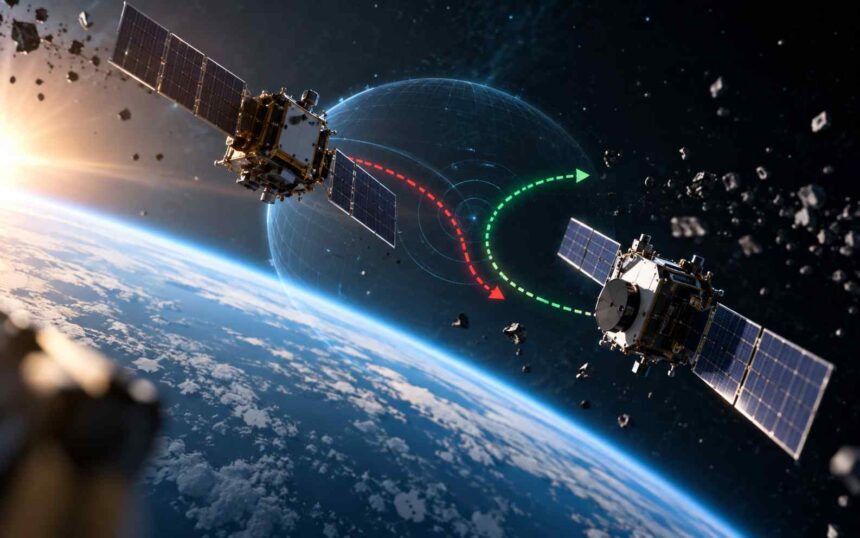
Artificial intelligence and robotics are changing approaches to space exploration and satellite launches, allowing systems to process data autonomously, choose courses of action, and respond to hazards. These technologies are particularly important for missions where direct control from Earth is difficult or delayed.
The Perseverance and Curiosity rovers operating on Mars use artificial intelligence to detect obstacles, assess potential hazards, and choose routes to research areas. In the future, such systems are expected to become less dependent on constant human supervision and be able to adjust their actions based on new environmental data.
Robots are also being used to collect and process lunar and Martian resources. They can support the extraction of water, oxygen, and metals, as well as the construction of future habitats. Artificial intelligence-controlled robots can also service space infrastructure, while Canadarm2 on the International Space Station assists with spacecraft servicing and external inspection tasks.
In the satellite sector, automated systems can deploy several small spacecraft into designated orbits simultaneously and select options that reduce the risk of collisions. This is particularly important for networks with large numbers of satellites.

Artificial intelligence also makes it possible to process some data directly on satellites, sending only the most important results back to Earth. Researchers at MIT are developing systems that can calculate the trajectories of space objects and help avoid potential collisions.
The role of artificial intelligence in space is growing not only because more devices are being sent into orbit, but also because the amount and timing of their control are difficult for humans to manage fully. When a system can process data on site and choose a course of action, the need for centralized control from Earth is reduced in some cases.


At the same time, increasing autonomy creates new requirements. The radiation, vacuum, and extreme temperature changes mentioned in the article can interfere with system operations, while the growing number of devices in space requires their safe coordination. For this reason, technological development in this field must also be accompanied by clear rules and cooperation between states and private companies.