



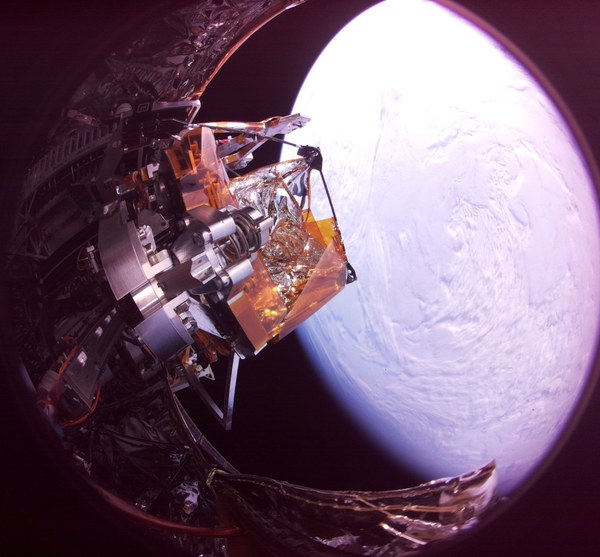
Developed by Caltech researchers and funded by DARPA, a robotic system has successfully built a space structure without the direct participation of astronauts. This innovative device, which is part of the NOM4D program, consists of an autonomous manipulator that takes struts and joints located in neighboring dispensers, sequentially assembling individual sections of the perimeter truss.
Project leader Sergio Pellegrino notes that this is the first time in history that a structure has been assembled autonomously in open space. Although the team faced time constraints and managed to build only the initial section of the antenna, this successful test proved the viability of such an approach, which will make it possible to create structures with huge reflective surfaces in the future.
Until now, bringing large-scale structures into space practically relied on only two methods: either folding them before launch and deploying them in orbit, or having astronauts manually assemble them during several separate flights. This new technology opens a third and more promising path: building the necessary large structures on-site while in orbit.
The successful test of autonomous assembly of large-scale structures in space opens a new era for astronomy and space engineering. When the size limitations of conventional rockets cease to be an obstacle, scientists get the opportunity to build huge telescopes and solar panels on-site. Although this first mission had certain time limitations, it clearly demonstrated how the main complexities of space logistics can be bypassed.