



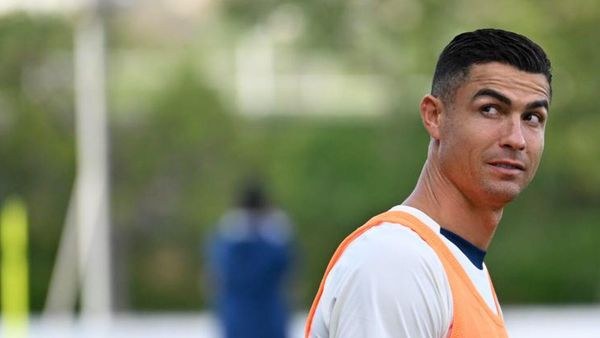
Portugal national team captain Cristiano Ronaldo, a 41-year-old forward, has been suspended for 30 days and fined €255. The reason is a conflict with head coach Jorge Jesus, after which the player voluntarily left the national team camp. The disciplinary council of the Portuguese Football Federation (FPF) made the decision.
Ronaldo had faced a suspension of up to six months, but he avoided the maximum penalty. Since the incident occurred back in September, the imposed ban period is already expiring, which will allow the player to take part in the matches scheduled for November. He is expected to take the field on November 14 in the upcoming Nations League games against Denmark and Wales.
The Al-Nassr star left the training base in Copenhagen on September 30, ahead of the match against Denmark. Tension had arisen during the previous match against Norway, when Jesus sent Ronaldo to warm up but never gave him playing time. At a press conference, the coach stated that "the player did not play against Norway and will not play against Denmark either."
Reacting to the events, Ronaldo stressed that the coach had twice broken his promise to him: first, he did not include him in the match, and then he did not publicly tell the story of the incident, although he had committed to doing so. At the same time, the forward apologized to the national team and the fans, confirming that he does not intend to end his international career.
It should be noted that Ronaldo has made 234 appearances for the Portugal national team, scoring 146 goals and providing 45 assists.
For Ronaldo, this story might not have been among the toughest, if not for one circumstance: at 41, the player is still fighting for a place not at his club, but in the national team. A 30-day suspension seems a mild punishment, but behind it lies a more subtle calculation: the term expires right before the November matches, meaning Ronaldo will effectively miss only a few weeks, not important fixtures.


The question, however, lies elsewhere. The relationship between Jesus and Ronaldo has turned into a public conflict, and this is no longer about a single incident but about a crisis of trust. The coach did not field the star, then spoke publicly about his absence—despite, according to the player, a different agreement. Such things are usually not forgotten in a national team.
Everything depends on how the November matches unfold. If Ronaldo returns and scores, the topic will quickly fade. But if he finds himself on the bench again, then these 30 days will become merely the first episode in a story whose ending no one yet knows.