






Billionaire businessman Samvel Karapetyan, who spent nearly seven months in prison last year, was arrested again today. However, it is not yet known whether the 61-year-old businessman, who has been under house arrest since January, will be remanded in custody again.
The new criminal case is linked to Electric Networks of Armenia (ENA), which belongs to the Karapetyan family. The company has been declared to be of overriding public interest, and the state appointed a temporary manager last year. The nationalization process is still underway, and once it is completed, the government intends to transfer the company to international management.
The Investigative Committee suspects Karapetyan of orchestrating a scheme that caused ENA losses of 64.5 billion drams, or approximately $180 million, between 2016 and 2024. Criminal proceedings have also been initiated against 35 other people on charges of abuse of official authority or influence derived from official position, embezzlement of property on an especially large scale, and money laundering.
According to investigators, ENA executives took out loans without any genuine need, presenting them as necessary to ensure the company's operations. The funds were then transferred in the form of dividends, loans, and advance payments to ENA shareholders Liormand Holdings Limited and Tashir Capital. Investigators allege that Karapetyan organized a process to conceal the criminal origins of the money by converting it and mixing it with other income belonging to individuals associated with him.
Before the arrest, investigators searched the residences of Karapetyan and his nephew, MP Narek Karapetyan, as well as a total of 65 addresses linked to them. The criminal case also mentions Narek Karapetyan, head of the Strong Armenia parliamentary faction, and MP Davit Ghazinyan. However, parliamentary authorization is required to initiate criminal proceedings against them and deprive them of their liberty. The Prosecutor General's Office has not yet filed a motion to lift their parliamentary immunity.
The new case concerns ENA's financial transactions, but its consequences could also extend to the Strong Armenia parliamentary faction. For now, the allegations under investigation must be distinguished from facts established in court: the charges presented by the Investigative Committee do not in themselves mean that the guilt of the individuals named has been proven.

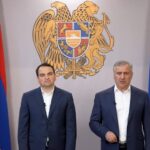
The political situation adds further tension to the case. Disputes between the government and the opposition over a new Constitution are continuing, while Narek Karapetyan has linked the latest arrests to his political stance. The government has not publicly responded to these claims, so the available statements alone do not make it possible to conclude whether the criminal case has a political motive.
Key developments in the coming days will include the decision on Samvel Karapetyan's preventive measure, the progress of the investigation, and the question of the MPs' parliamentary immunity. It remains unclear whether the Prosecutor General's Office will approach parliament on the latter issue. These decisions will provide a clearer picture of how the case will proceed on both legal and political fronts.


