




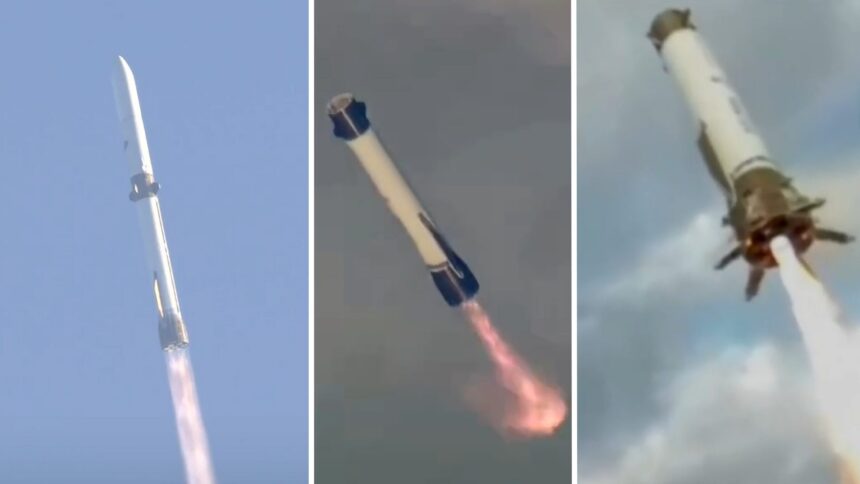
Blue Origin's New Glenn rocket has successfully placed NASA's twin interplanetary ESCAPADE spacecraft into orbit on its second attempt.
About seven minutes after liftoff from Florida's Space Coast, the rocket's first stage re-entered Earth's atmosphere, reignited its engines, and landed vertically on the Jacklyn landing platform stationed in the Atlantic Ocean. This makes the company the second in history to successfully recover a rocket during an operational flight.
Additionally, the more than $80 million ESCAPADE mission aims to investigate how Mars lost its atmosphere over time, transforming into a dry and barren planet.
The mission's two probes will first head to the Sun-Earth Lagrangian point 2, from where they will return for a close flyby in November 2026 to gain the necessary gravity assist for their journey to the Red Planet.


This success opens a new chapter in cooperation between private space companies and government agencies, as until now, only SpaceX had managed to routinely recover rocket boosters. At the same time, the data generated by ESCAPADE will allow scientists to gain a deeper understanding of planetary atmospheric evolution by working alongside other spacecraft already operating in situ.