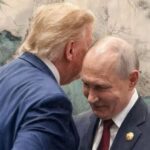


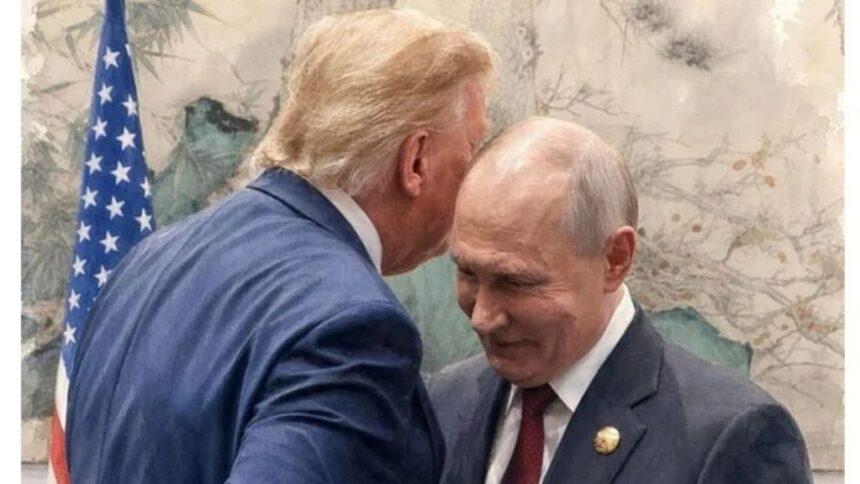
US President Donald Trump posted an artistically stylized photo on his Truth Social platform the previous day, showing him shaking hands with Russian President Vladimir Putin. The words “My Friend” appear above the image.
At the start of their meeting on November 19, held on the sidelines of the Asia-Pacific Economic Cooperation (APEC) summit in Shenzhen, China, Trump had already referred to Putin as his friend. According to the report, this was likely the first time the US president had publicly used such wording.
Trump's remarks drew criticism from Democratic senators. The following day, during a press conference at the White House, journalists asked him whether he considered Putin a friend of the United States.
“I cannot speak on behalf of America,” Trump replied, while adding that he had “very good relations” with Putin.

What stands out in this episode is the distinction between personal relations and a country's official position. Trump speaks publicly about his good relationship with Putin, yet when journalists asked whether he considered the Russian president a friend of the United States, he declined to answer on the country's behalf. This distinction is not incidental: the president's personal assessment does not necessarily represent the position of the entire state.
The criticism from Democratic senators shows that Trump's choice of words is also provoking a political reaction within the United States. It is also noteworthy that, following his November 19 remarks, he returned to the same wording, this time featuring it in a published photograph as well. As a result, the focus is not only on the relationship between the two presidents but also on how Trump's personal descriptions are being received in the American political arena.