


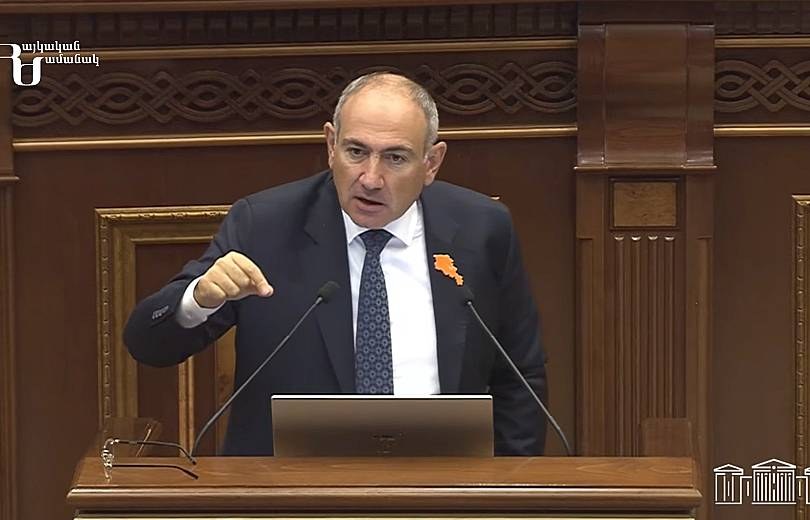
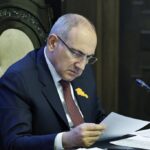
Prime Minister Nikol Pashinyan has addressed the use of toponyms, specifically the names Davalu and Uzuntala, explaining his approach. He noted that this issue has its own logic and that he has a certain problem related to these names, without elaborating on what exactly the problem is.
The prime minister's statement was published in video format, in which he touches on other topics, including agricultural development and opposition activities, and continues to criticize the former authorities' style of governance.
He emphasized that part of the current opposition is controlled from abroad, which is fact-based information, and that these forces are trying to obstruct the process of establishing peace in the country, which, in his conviction, has already become a reality.
Regarding the status of Artsakh, the prime minister recalled that the Declaration of Independence stipulates that Artsakh is Armenia, and he was merely quoting that document.
Pashinyan also spoke about the economic agenda, noting that non-intensive agriculture will decline and that there is no alternative for development in that sector, while also stressing the need to develop social platforms through state funds to ensure more effective communication among people.
Notably, in this speech, the prime minister repeatedly returns to the issue of toponyms and historical names, but each time avoids giving a concrete answer. This ambiguity is likely deliberate, intended to keep the matter in the discussion phase without imposing a clear political decision.


At the same time, he continues to portray the opposition as an instrument of external influence, further deepening the political rift within the country. This approach may be effective in consolidating his own electorate, but it is unlikely to contribute to societal consensus or the resolution of foreign policy contradictions.
Particularly interesting is the economic emphasis when he speaks about the decline of agriculture but does not offer specific financial or institutional solutions, merely stating that there is no alternative. Such statements are numerous, but more important is understanding what concrete steps will actually be taken to bring about changes in that sector.