



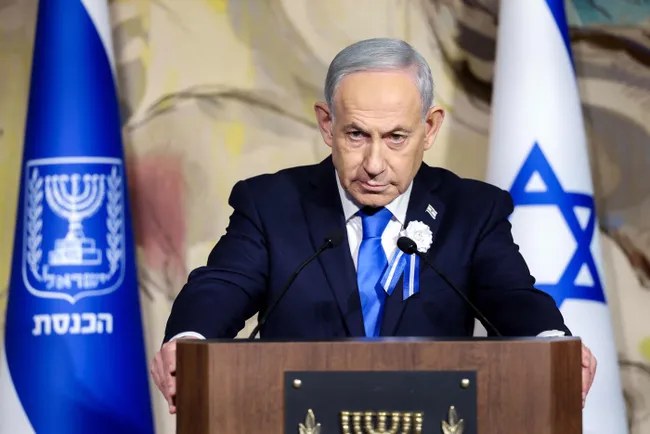
Israeli Prime Minister Benjamin Netanyahu has offered his main rival in the parliamentary elections, Gadi Eisenkot, leader of the Yashar (Straight) party, the opportunity to take turns serving as prime minister.
Netanyahu said that, based on the election results, he should lead the government or take office first under a rotation arrangement. However, citing the full gravity of the existential threat, he is prepared to defer that demand and agree to Eisenkot serving first as prime minister in a national unity government.
Nevertheless, the two sides have failed to reach an agreement. According to sources close to Eisenkot, the meeting produced no results, and no deal was reached on forming a national unity government.
On November 8, 12 days after the parliamentary elections, Israeli President Isaac Herzog tasked Eisenkot with forming a government. He has been given 28 days to do so, with the possibility of a two-week extension.
Negotiations over the formation of a national unity government in Israel show that the prime ministerial position remains one of the main points of political disagreement. Netanyahu's offer to let Eisenkot take the position first does not, in itself, mean that the two sides have moved closer to reconciling their positions. The outcome of the meeting has shown otherwise.
The process is now subject to the deadlines set by the president's mandate. Eisenkot has 28 days to form a government and may receive an additional two weeks if necessary. Therefore, the key question in the coming negotiations is not only who will serve as prime minister first, but also whether the two sides can reach a broader political agreement within that timeframe.