



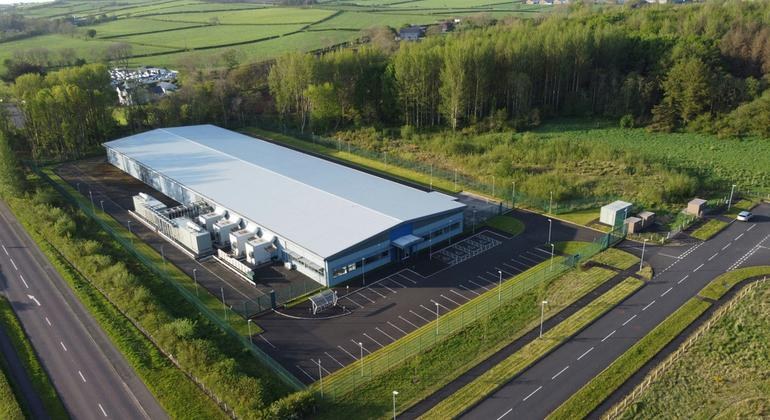
Data centers powering artificial intelligence systems could consume around 945 terawatt-hours of electricity per year by 2030. This is nearly triple the combined annual energy consumption of Pakistan, Bangladesh, and Nigeria, which together are home to over 650 million people.
A new study by the United Nations University shows that this is only the tip of the iceberg. Beyond electricity, vast water and land resources are consumed for data center cooling and power generation. By the end of the decade, AI-related water consumption could match the annual domestic demand of 1.3 billion people, while the land area occupied could exceed 14,500 square kilometers—nearly double the size of the Jakarta metropolitan area.
The report notes that current assessments primarily focus on greenhouse gas emissions while ignoring other environmental impacts. Certain solutions considered "green," such as transitioning to renewable energy, may reduce carbon emissions but significantly increase water and land use at the same time.
Public discussions mostly center on the training of AI models. In reality, however, daily ongoing use accounts for 80 to 90 percent of total energy demand. For instance, one popular service processes about 2.5 billion queries per day. Generating a single image with AI requires a thousand times more energy than processing standard text, while video generation is even more resource-intensive.


The environmental burden is not distributed evenly. The benefits of the technology are global, whereas the costs are concentrated in specific regions. In some countries, data centers already consume a substantial share of national electricity, while in others, they strain water resources during droughts. By 2030, up to 2.5 million tons of electronic waste could be generated annually, with the disposal burden falling primarily on low-income countries.
Furthermore, more than 90 percent of specialized AI computing power is concentrated in just two countries—the United States and China—while over 150 nations lack their own infrastructure. Researchers emphasize that this is not a campaign against technology, but a call to ensure its development remains within planetary boundaries.



The expansion of artificial intelligence infrastructure demonstrates that digital progress comes with a very concrete and tangible physical price. When a technological revolution is discussed, its impact on natural resources is often overlooked—an issue that becomes particularly acute in regions facing water and energy deficits.
Notably, the bulk of resource consumption stems not from model development, but from our daily usage. This means that the mass adoption and everyday application of AI tools directly exacerbate environmental pressures.
In the coming years, regulating this infrastructure will become a priority for governments and tech giants alike. Without clear standards and efficient resource planning, this technological leap could deepen regional and social inequalities.