



Archaeologists claim to have located the site of the First Council of Nicaea, a pivotal gathering in the history of Christianity held in 325 AD. However, a number of independent experts warn that it is too early to definitively link the church remains discovered at the bottom of Lake Iznik to this historical event.
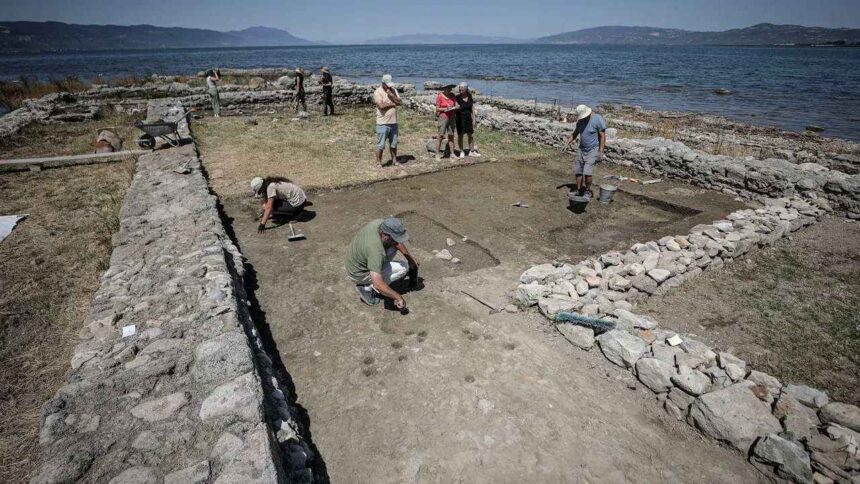
Excavations are underway on the shores of Lake Iznik in modern-day Turkey, the site of the ancient city of Nicaea. In the 4th century, at the initiative of Roman Emperor Constantine the Great, hundreds of bishops convened here to resolve theological disputes and lay the foundation for the Nicene Creed.
The underwater ruins were discovered in 2014, and subsequent studies have revealed an ancient structure hidden beneath a larger basilica. The head of the excavations, Professor Mustafa Sahin, is convinced that this small church may be connected to the council. He relies on data from the stone paving and historical sources that hint at a chapel dedicated to Saint Neophytos, a martyr.
However, other historians are more cautious. Richard Kim notes that the find lacks reliable dating, and that the council participants could have gathered in various locations, including the imperial palace. According to historian David Gwynn, this church offers insight into the setting of the period rather than serving as definitive evidence of the primary meeting site.
The council, which brought together thousands of participants, had a profound impact on the Christian world. As excavations continue, the exact location of the 325 AD council remains a subject of academic debate.
The underwater excavations at Lake Iznik once again serve as a reminder of how fragile historical memory is over time. While scientists debate whether the discovered structure could have accommodated hundreds of bishops, the issue remains not only architectural but also documentary.



It is important to understand that information regarding churches from the antiquity period is often based on indirect sources. Professor Sahin's hypothesis is compelling, yet the possibility pointed out by Richard Kim regarding the existence of an imperial palace, which remains underwater for now, suggests that the main "meeting hall" may be elsewhere. Future excavations will likely clarify whether we are dealing with the site of the historical council or simply a monument typical of that era.