



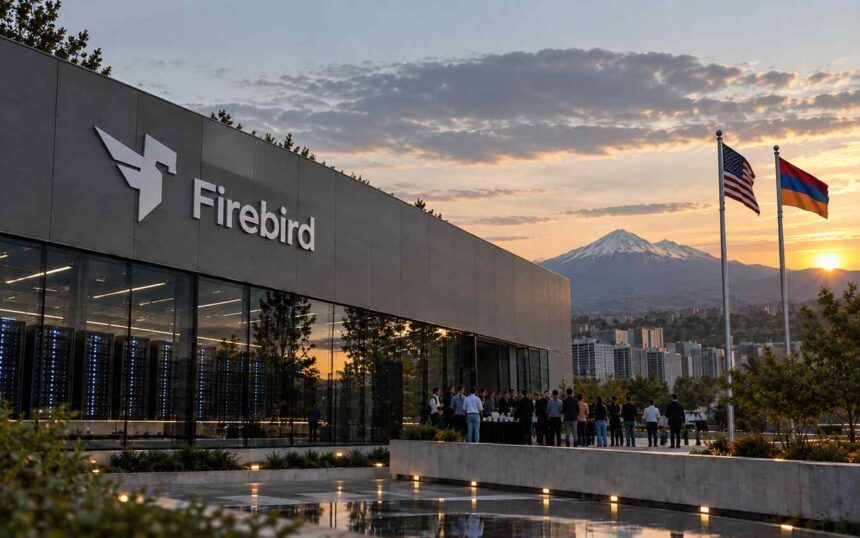
In a comprehensive article, Bloomberg explores the AI factory of the company "Firebird AI" in Armenia, highlighting the country's technological capabilities and its collaboration with the United States. The agency notes that during the Cold War, Armenia—the smallest state of the Soviet Union—was one of the communist superpower's primary centers for electronics and technology. Now, according to Bloomberg, Armenia is moving toward becoming a leading global hub for American artificial intelligence infrastructure.
San Francisco-based startup Firebird began construction of a data center in Armenia in August. By the end of next year, the facility's capacity will reach 300 megawatts, equipped with over 70,000 cutting-edge chips. One-fifth of its processing power is designated for domestic use to support local research, government, and startup ecosystems, while the remainder is allocated to foreign entities, including American companies such as Perplexity AI.
Founded by entrepreneurs of Armenian descent, Firebird has emphasized that the complex, located in Hrazdan—about 45 km from Yerevan—is set to become the region’s largest computing cluster and one of the largest in Europe. "This is an economic advantage with far-reaching implications for the South Caucasus and neighboring Central Asia, where Firebird is already expanding, and where major powers are competing for dominance in a strategic corridor that links Europe and China while bypassing Russia," the publication states.
"Armenia has remarkable technical talent and a dynamic, growing innovation ecosystem. That is why we have long been investing in its future. We know that Armenia can create economic opportunities that, in turn, will strengthen regional ties and help lay the foundation for long-term stability," noted a representative from Nvidia.
For Armenia, this project primarily signifies the country's attempt to secure a place in the global AI supply chain, not as a consumer, but as an infrastructure provider. This represents a significant shift, as such centers require not only chips and electricity but also a constant supply of professional staff, the training for which takes years.
It is also noteworthy that a portion of the center's capacity is intended for local use to support research, government, and startup ecosystems. If this component functions as intended, Armenia will be able to retain its talent, who currently often move abroad in search of better opportunities.

At the same time, much still depends on export licenses and American regulations, which are subject to change. This dependency remains the most volatile element of Armenia's technological ambitions.