



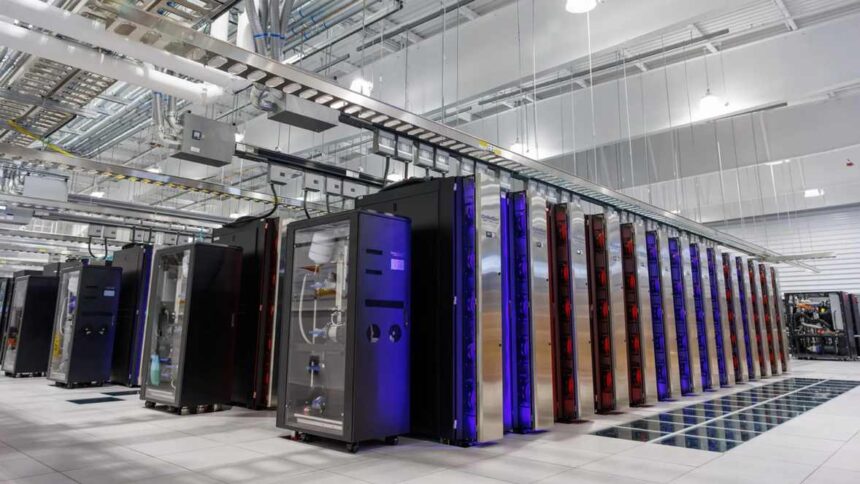
Artificial intelligence systems and data centers in the United States consumed about 415 terawatt-hours of electricity in 2024, accounting for more than 10 percent of the country’s total generation. According to forecasts, that demand could double by 2030, raising new questions about the sustainable development of artificial intelligence.
To address this challenge, engineers have developed an experimental AI system that combines neural networks with symbolic reasoning. The approach, known as neuro-symbolic artificial intelligence, is designed to help robots see, understand instructions and perform physical actions. Such systems are known as vision-language-action, or VLA, models.
Unlike approaches based solely on data and trial and error, the new system breaks problems down into steps and applies rules, such as those related to shape and balance. This allows it to reach solutions with fewer errors and reduce unnecessary attempts during training.
Researchers tested the system using the classic Towers of Hanoi puzzle. The neuro-symbolic VLA achieved a 95 percent success rate, compared with 34 percent for standard systems. In a more complex version that the system had not previously encountered, the new model succeeded in 78 percent of cases, while traditional models failed in every attempt.
Training time also dropped sharply, from more than a day and a half to just 34 minutes. Energy consumption during training was just 1 percent of that required by a standard VLA system, while energy use during operation was 5 percent. The research team says the approach could reduce energy use by up to 100 times while improving performance on certain tasks.
The researchers believe the neuro-symbolic approach could provide an alternative direction for systems that currently rely heavily on data and enormous computational resources. As AI adoption continues to grow, energy demand is also increasing, while the expansion of data centers is placing additional strain on power infrastructure.



These results show that improving AI efficiency is not simply a matter of using larger models and more data. The system tested here takes a different approach by adding predefined rules to statistical patterns during training, allowing certain tasks to be solved with fewer attempts.
However, the reported results concern a specific experimental system and the Towers of Hanoi task, so they do not automatically mean that the same savings can be achieved across all AI applications. The approach’s broader significance will depend particularly on how well it performs on more complex robotic tasks, where visual data, language instructions and physical actions are interconnected at the same time.