


New DNA analysis taken from Thomas Jefferson's hair has shown that the third U.S. president was the father of the children of Sally Hemings, a slave owned by his family.
Specialists at the Smithsonian Institution compared genetic material obtained from the president's hair with DNA samples from 13 probable descendants of him and Hemings. Archaeologists, genealogists, molecular geneticists, and historians participated in this extensive work, which lasted around 15 years, trying to find a definitive answer to rumors circulating since the early 19th century. According to researcher Richard Kurin, who led the project, the evidence is more than convincing.
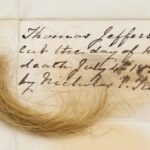
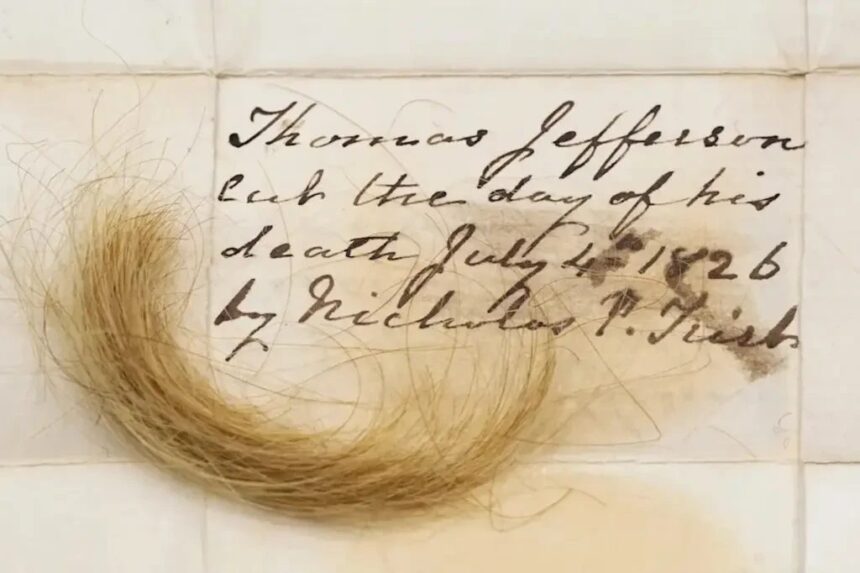
The studies began in 2011, when Kurin was filming a documentary about Jefferson's personal Bible. While searching the pages for traces of the president's blood, scientists found three hairs, which, however, did not match the DNA of his relative on his mother's side. Later, researchers managed to obtain a lock of hair cut at Jefferson's deathbed at the Monticello estate in 1826, thanks to which his complete genome was decoded.
To test various paternity hypotheses, specialists conducted around 20,000 simulations. The results showed that the probability that Jefferson was not the father of Hemings's sons, Madison and Eston, is less than one in a thousand.
However, the research proceeded with certain disagreements. One of Hemings's descendants demanded that his data be removed, as he did not like that Kurin's book was to be published before the article appeared in a scientific journal. The institute destroyed the sample and conducted the analysis again.
David Miller, from Jefferson's 6th generation, noted that he is happy with the results and with getting to know the Hemings family, expressing hope that that family will receive the recognition it deserves.


This genetic discovery closes one of the most controversial pages of U.S. history, which had been a subject of discussion for decades. The confirmation of such data regarding the personal lives of historical figures also changes the perception of the social reality of the country's formative period.
The application of modern DNA research to historical questions shows how science can recover silenced or denied facts. This is also an important precedent for correcting other historical discrepancies.