



The AI-generated drug rentosertib has shown signs of reversing biological age during a clinical trial for pulmonary fibrosis. This is reported by Nature Biotechnology, which published a study by Insilico Medicine conducted with an international team of scientists from Harvard Medical School, Stanford University, the Broad Institute, RWTH Aachen University, and Peking and Westlake universities.
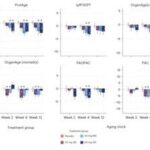
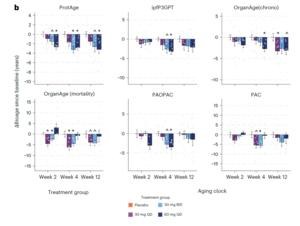
During the study, scientists analyzed the blood protein profiles of 42 patients who participated in the Phase IIa clinical trial, covering 2,841 proteins. Six independently developed proteomic aging clocks were used: ProtAge, OrganAge, PAC, ipfP3GPT, and PAOPAC. Although they are based on different methodologies and training criteria, all six consistently recorded a trend of biological age reversal in patients receiving rentosertib compared to the placebo group. The maximum effect was observed at week 4 in participants receiving 30 mg twice daily, where biological age was reversed by approximately 3-4 years, and with some clocks, by up to 6 years.
In addition, forced vital capacity (FVC), an important indicator that declines with age, showed a dose-dependent reversal compared to placebo, which aligns with the proteomic indicators. The study also showed that the drug's anti-aging effect is partly independent of its respiratory benefits: the greatest improvement in lung function was recorded at one dosage, while the strongest signal of age reversal was at another dosage. This means that the drug's effect is not simply a consequence of disease improvement.
Rentosertib was created using Insilico Medicine's Pharma.AI generative platform. The TNIK target was discovered with the help of AI as a gene involved in six hallmarks of aging, making it a dual-purpose target for both aging biology and idiopathic pulmonary fibrosis. The drug has completed Phase III clinical trials in China.
Idiopathic pulmonary fibrosis is a chronic, scarring lung disease that gradually and irreversibly reduces lung function. It affects about 5 million people worldwide, with a median survival of 3-4 years. Existing treatments can slow disease progression but are unable to stop or reverse it.
The most interesting part of the study is not the magnitude of the reversal, but that six independent models developed by six different teams — with different algorithms and data — signaled in the same direction in the same 42 patients. When models share not the features but only the conclusion, it no longer seems like a coincidence. That is what makes this result worth following, rather than just marketing numbers.


At the same time, the limits must be clearly understood. We are talking about 42 people, and they are all patients with pulmonary fibrosis, not healthy volunteers. That is, we still do not know whether the same effect will be repeated in healthy people, and whether it is not conditioned by the treatment of the disease itself. This is precisely the question that remains most important for further research.
If this approach is confirmed in larger and more diverse groups, it could change not only the search for anti-aging drugs, but also how we generally assess age-related changes in drug trials.