



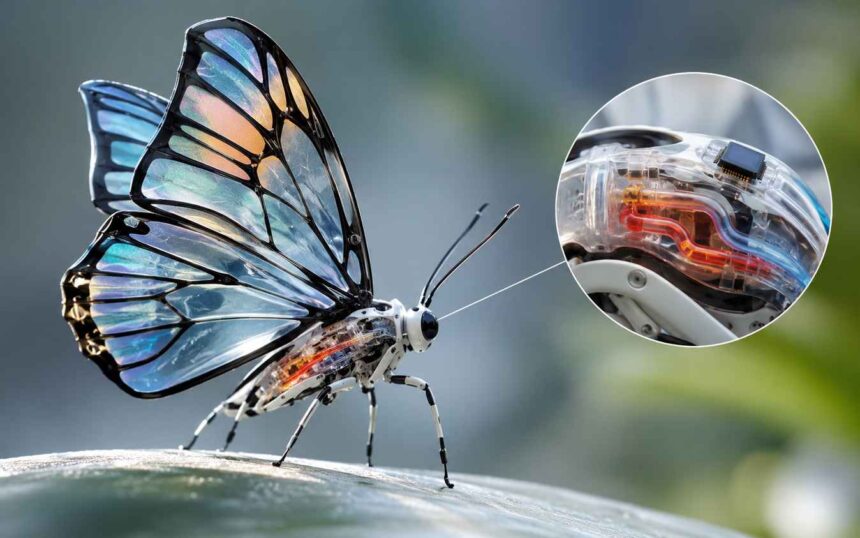
Estonian researchers have created a butterfly-like robot with an artificial circulation system operating inside it. This system transports chemicals to different parts of the body, where new light-sensitive sensors can form under the influence of ultraviolet light. In other words, the robot is able to grow a new sensory organ inside its own body using its very own artificial blood circulation.
Such an approach could in the future allow robots to independently develop new capabilities without all components being pre-installed at the factory. This means the machine will no longer have to remain entirely dependent on the parts placed inside it at the time of manufacture.
This experiment is interesting primarily because the robot's "senses" cease to be something finally determined at the moment of production. If a new sensor can emerge inside the body under the influence of light, then the machine's capabilities can change over time without installing additional parts.
However, much remains unknown here. The experiment was conducted under laboratory conditions, and it is unclear how stable such a "grown" sensor would be in a real environment, as well as how much time and resources the process requires. For now, this concerns a single demonstration model, not a ready technology that will appear in production tomorrow.