



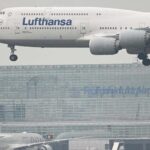

The Portuguese government signed an agreement with Germany’s Lufthansa on Tuesday to sell up to 49.9% of shares in national airline TAP, formally confirming the deal, which officials had announced they selected back in October.
Portuguese Prime Minister Luís Montenegro said the agreement would allow the country to safeguard its strategic interests, as well as TAP’s brand and identity. Another key condition of the deal is preserving the airline’s distinctive role in serving Portugal’s autonomous regions, Portuguese-speaking countries, and Portuguese-speaking communities around the world.
“Today, the country is taking an extremely important step toward preserving a Portuguese airline with a Portuguese brand and identity,” Montenegro said.
Lufthansa CEO Carsten Spohr also confirmed that “TAP will remain a Portuguese airline.” He said the German group intends to develop Lisbon as one of its key hubs while preserving TAP’s distinctive role. Porto, Madeira, and the Algarve also hold an important place in Lufthansa’s strategy.
In October, the Portuguese government selected Lufthansa’s offer to buy up to 49.9% of TAP’s shares for €1.201 billion. Up to 5% of the shares are also expected to be allocated to the airline’s employees. For now, the state will retain 51% of the capital and control over the board of directors.
The deal requires final approval from the European Commission, which the Portuguese government expects to receive in the first half of 2028. Until then, TAP will continue operating independently, although Lufthansa will exercise oversight over the company.

The sale of TAP is more than an economic transaction for Portugal. The airline is also an important part of the country’s international connections, which is why the government is seeking investment while maintaining national control. The agreement with Lufthansa shows that the state does not intend to relinquish its influence over the airline’s management entirely.
The deal’s actual outcome will depend on how Lufthansa’s development plans are reconciled with the conditions for preserving TAP’s national identity. The question of employee ownership is also important, as the change in ownership affects not only the financial interests of the two parties.
The deal is not yet final pending the European Commission’s decision. For now, it remains an agreement whose actual impact on the airline’s operations and Portugal’s air connections can only be assessed once it has been completed.