




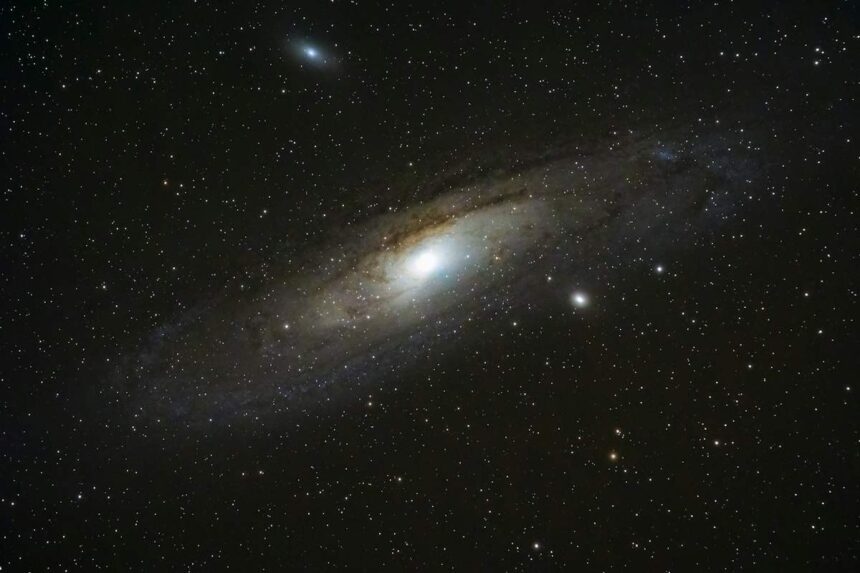
The MeerKAT radio telescope array in South Africa has detected an unprecedentedly stable radio signal coming from deep space. The signal originates from a dwarf galaxy located 3.2 billion light-years from Earth and repeats at an exact 16-hour interval.
The detected signal stands out for its extraordinary stability and periodicity, making it difficult to explain its nature. It challenges astrophysicists' existing theories about magnetars and fast radio bursts.
What makes this discovery particularly interesting is that astronomers are not dealing with just another radio signal arriving from distant space, but with a phenomenon that repeats at a clearly defined interval. The precise 16-hour rhythm narrows down the range of possible explanations and forces scientists to reconsider the ideas they use to understand the origins of such cosmic signals.
Magnetars and fast radio bursts are already studied phenomena in astrophysics, but the distinctive features of this signal suggest that our understanding of them is still incomplete. The most important question is the source of the signal. Until its nature is established, it is too early to attribute it to any known cosmic object. The discovery could open up a new direction in the study of such radio signals.