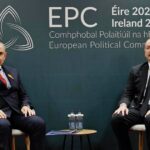

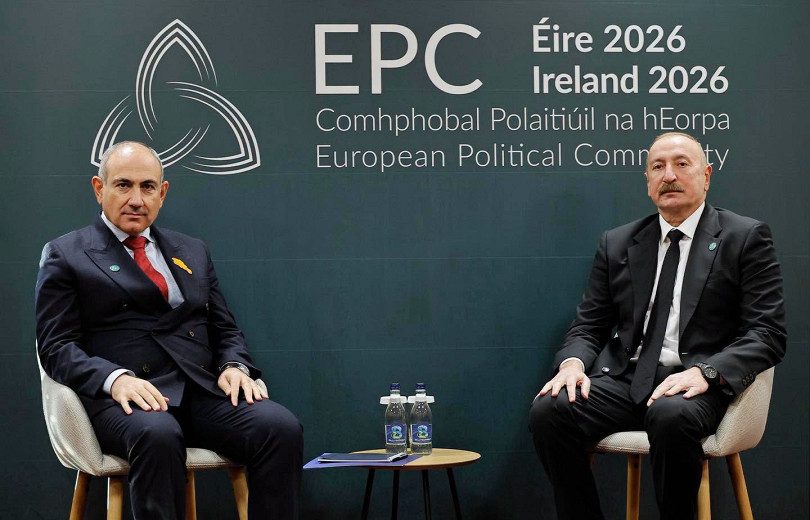
Within the framework of the 9th summit of the European Political Community taking place in Dublin, the capital of Ireland, Armenian Prime Minister Nikol Pashinyan met with Azerbaijani President Ilham Aliyev on November 12.
The leaders exchanged views on advancing the peace agenda, building on the results of the summit held in Washington on August 8, 2025, and the joint declaration signed there. The discussions focused on practical steps toward further strengthening peace, including the development of transport and transit links, economic and trade relations, border delimitation, and confidence-building measures.
In this context, the parties discussed the progress of the "Trump Route for International Peace and Prosperity" (TRIPP) project, including the planning and design of its railway and road components, as well as the prospects for transit links along the TRIPP route.
The transit of goods through Azerbaijan's territory to and from Armenia was noted as a positive development. Since last November, a total of 105,000 tons of cargo has been transported to Armenia through Azerbaijan's territory.

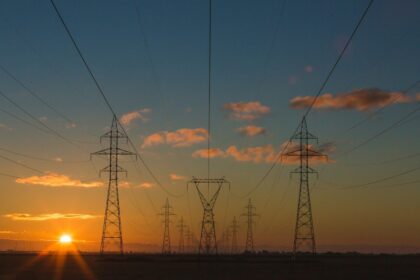
The parties also exchanged views on opportunities for the further development of economic and trade relations, including the upcoming interconnection of electricity grids. The leaders emphasized the importance of cooperation in the field of the environment and transboundary water resources and welcomed the establishment of working groups on transboundary river management.
In conclusion, the leaders reaffirmed the importance of maintaining positive momentum in the peace process and continuing dialogue aimed at strengthening peace, stability, and prosperity in the region.


The numbers perhaps speak best to what is actually happening. 105,000 tons of cargo over the course of a year, against the backdrop of a route that was closed until recently, is a serious indicator, and this was noted during the meeting itself. But transit is one thing, and the interconnection of electricity grids is something else entirely. The first can be launched quickly; the second requires technical designs, investment, and time.
It is noteworthy that this time a separate place on the agenda was allocated to transboundary rivers and the establishment of working groups. Water in the region is often a more sensitive topic than the land border, and here the first concrete steps are being taken.
Of course, the Dublin meeting does not yet mean that all issues are resolved. There are still open questions regarding delimitation, control of transport hubs, and the financing of TRIPP, and how they will be resolved in practice will be shown by the work of the coming months.