



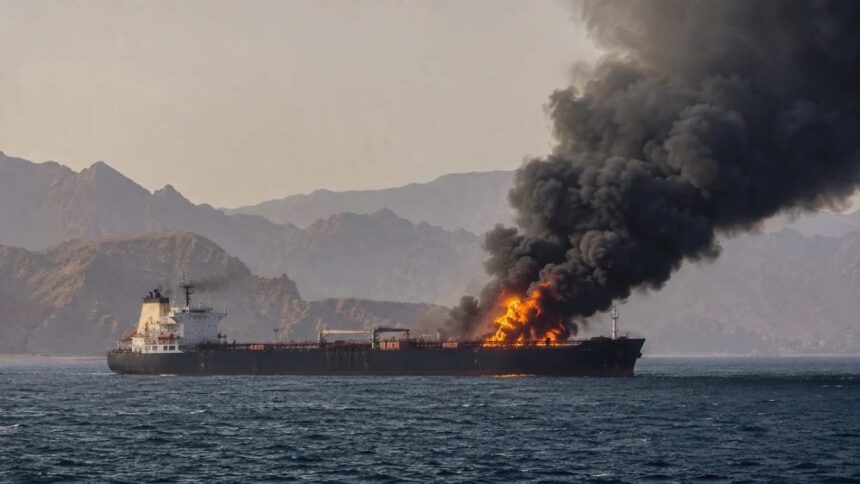
A liquefied gas carrier exploded on a mine in the Strait of Hormuz, the naval forces of Iran's Islamic Revolutionary Guard Corps have reported. According to a statement from the IRGC press service, the vessel had ignored numerous warnings several hours earlier and attempted to pass through the strait's prohibited and dangerous southern route. The Guard Corps noted that the explosion was very powerful.
Navigation through the Strait of Hormuz was seriously restricted on February 28 following the start of US and Israeli military operations against Iran. Tehran has stated that the restrictions will remain in place until its conditions are met, including the lifting of the American blockade and sanctions. Individual vessel transits continue, but traffic intensity remains significantly below pre-war levels.
The Strait of Hormuz is one of the key routes for global supplies of oil and liquefied natural gas.
The explosion occurred at a moment when traffic through the strait remains significantly below pre-war levels, and each such incident creates additional tension for remaining shipowners. Tehran has already set out its conditions — the lifting of sanctions and the blockade — and this incident is unlikely to soften its position. The question is whether individual vessel transits will continue at the same pace, or whether companies will again begin avoiding this route.
On the other hand, it is not yet known who owns the vessel and under what circumstances it ended up in the prohibited zone. The IRGC statement presents only their version, and there is no independent confirmation yet. It is precisely this uncertainty that will most affect the mood of oil and gas markets in the coming days.