





Physicists at Northwestern University have succeeded in controlling the quantum state of a single positron—the antimatter counterpart of the electron—with unprecedented precision, which could help answer one of physics' greatest questions: why the universe exists in the form we know it. The researchers captured a fast-moving positron produced by radioactive decay, slowed it down, and cooled it to a temperature just 0.3 degrees above absolute zero. The particle was then placed in a near-perfect vacuum, where electric and magnetic fields hold it suspended without touching the walls. In this way, scientists managed to keep a single positron in the laboratory for months.
Research team leader Gerald Gabrielse explained that the Big Bang should have produced equal amounts of matter and antimatter, which would have annihilated each other upon collision, leaving nothing behind. In reality, there is far more matter in the universe, and the Standard Model of particle physics cannot explain this imbalance. The scientists created a "single-positron quantum cyclotron," where the particle behaves like an artificial atom, allowing them to alter its energy levels using microwaves of a specific frequency.
Previously, Gabrielse's team measured the magnetic properties of a single electron with an accuracy of one part in ten trillion. Now, they are preparing to measure the positron's indicators with the same precision and compare the two particles. According to current theories, they should be mirror images of each other, but if even a tiny difference is discovered between the measurements, it will become the biggest discovery in physics in the last century.
For decades, the Standard Model of particle physics has explained the structure of the world around us, yet it faces a dead end on one fundamental question. If matter and antimatter were created in equal amounts at the moment of the Big Bang, the entire universe should have disappeared long ago due to mutual annihilation.
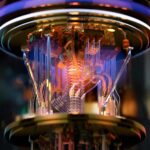


The device created by Northwestern University scientists allows this question to be answered not through theoretical assumptions, but via direct measurements. Keeping an antimatter particle stable for months was a serious technical challenge, as any contact with ordinary matter instantaneously destroys it.
Now, the most crucial phase lies ahead: comparing the magnetic properties of the positron and the electron. Even a slight deviation will show exactly where the current theory falls short and why our universe survived.