



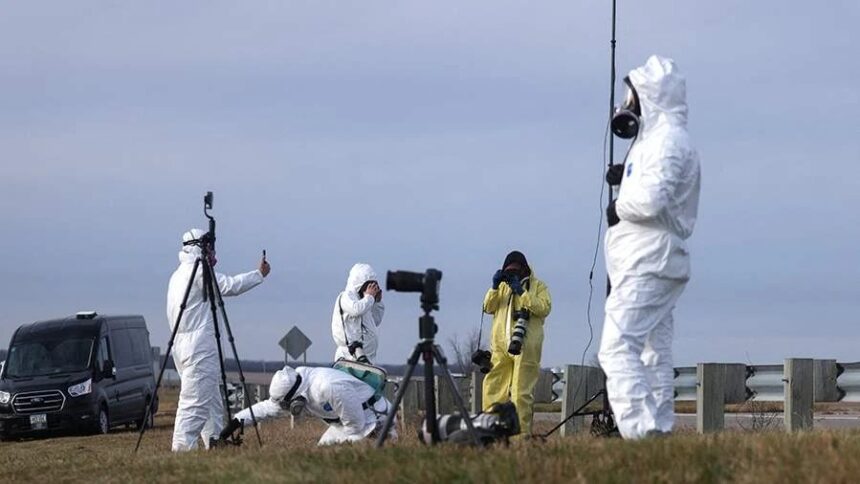
On November 25, the US military carried out a controlled detonation of 4.5 tons of lead azide at a defense facility in Middletown, Iowa. The operation took place on the grounds of the plant.
Specialists had taken extensive safety measures in advance to prevent potential hazards and reduce the intensity of the shockwave. Special earthen berms were built around the two bunkers housing the 5 US tons—or 4.5 thousand kilograms—of hazardous material, while the interiors were filled with foam and water. According to officials, these specific solutions made it possible to significantly absorb the energy of the blast.
At the moment of the detonation, a powerful boom was heard on the facility's grounds. Immediately afterward, two plumes of white smoke rose into the sky, dissipating rapidly a short time later.
Authorities had previously urged people to remain indoors for safety reasons. Nevertheless, some local residents ignored the warnings and went outside to witness the detonation firsthand.
Lead azide is a highly sensitive and toxic explosive primarily used as a detonator in the defense industry. Disposing of such a large volume of the substance requires exceptional precision, as even the slightest carelessness can lead to uncontrollable consequences.
The combined use of water and foam inside the bunkers is particularly noteworthy. This method not only weakens the blast's shockwave but also helps reduce the spread of toxic particles into the air.



At the same time, the residents' behavior highlights another issue. Even in the face of official warnings, human curiosity often proves stronger than the awareness needed to follow safety rules.