



Hetq — Environmental movements in Armenia have reached a new level of quality in recent years. While activism was primarily concentrated in Yerevan ten years ago, the situation has changed today: the environmental struggle has moved directly to the regions, where local residents themselves are forming active groups.
Hayk Abrahamyan, co-founder of the "Federation of Green Councils" movement, is convinced that talk of activism fading away is a false narrative. According to his observations, 56 cases of public mobilization have been recorded over the past two years, where citizens have united, organized petition drives, or derailed public hearings. Today, the activist is not a person arriving from the capital, but the very farmer who is voicing the risks of mining on the ground.
Community struggles often face serious obstacles. Mining companies frequently reach informal agreements with local government bodies in advance in exchange for donations or other promises. People face a difficult choice: either agree to a harmful project in the hope of having a livelihood amidst poverty and unemployment, or fight for their health and land.
One of the most painful tools used against activists is lawsuits known as Strategic Lawsuits Against Public Participation (SLAPP). These processes aim to pressure people financially and psychologically by dragging them into long-term litigation. Experts argue that anti-SLAPP legislation is necessary to protect human rights defenders and journalists from such pressure.
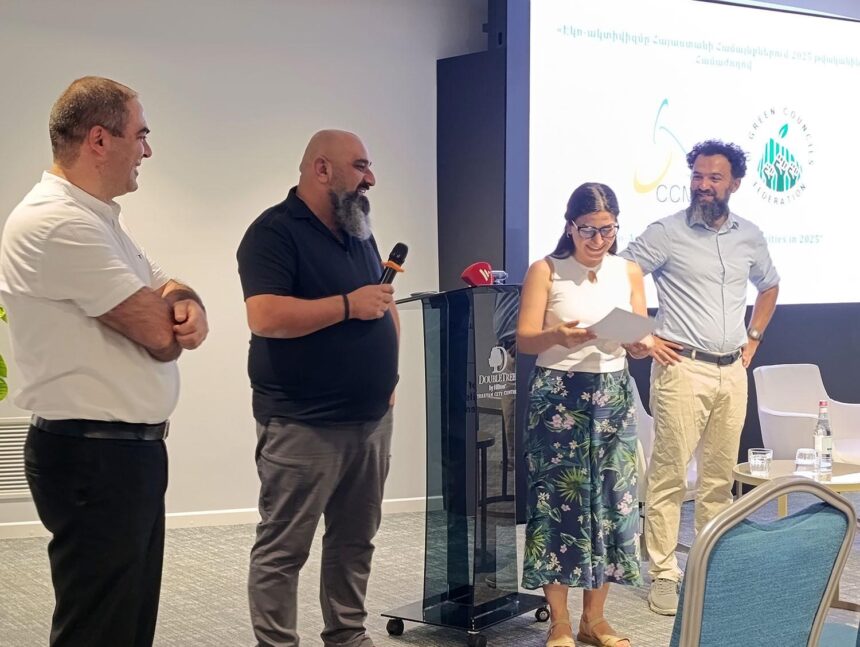
During the conference, the "Eco-activism 2025" awards honored individuals who are consistently fighting to preserve the ecosystems of Syunik, Ararat, and Vayots Dzor. Hayk Isakhanyan from Vayots Dzor, who rejects the development of mining in his region, considers his homeland not just as land, but as a beloved home and heritage. He is convinced that jeopardizing the future of tourism and agriculture is unacceptable. The goal of the newly established federation is precisely to unite activists from different communities so that they can defend their interests and ensure sustainable development at the national level.