




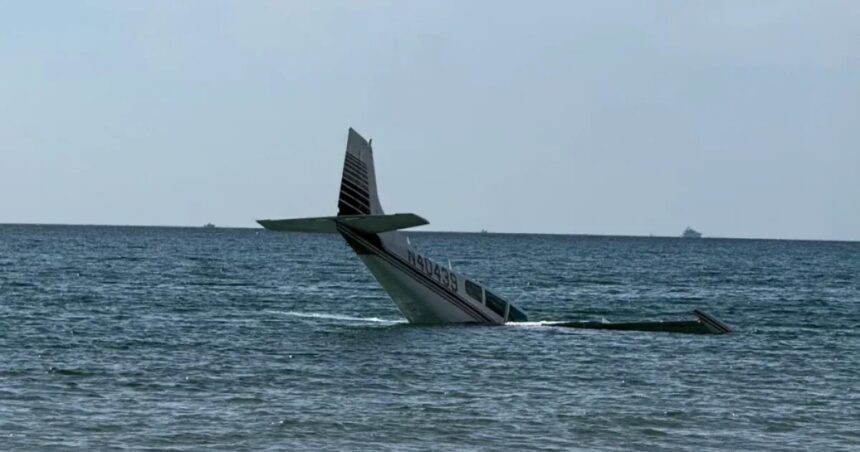
Off the coast of Boca Raton, Florida, 23-year-old pilot Faith Tenkely made an emergency landing in the Atlantic Ocean in a light twin-engine aircraft. She ditched the plane in the sea and remained completely unharmed.
The incident occurred on the morning of August 22, as Tenkely was flying solo from Fort Myers to the Bahamas, where she planned to pick up her parents. About 24 kilometers from Boca Raton, the aircraft developed serious technical problems. The right engine failed, and the landing gear stopped working.
Initially, the pilot had planned to make an emergency landing at a local airport, but quickly realized that landing on the runway could cause a fire, as the plane had just been refueled, and the malfunctioning landing gear increased the risk of a hard impact. At 09:40 a.m. local time, Tenkely directed the plane toward the ocean. Cameras captured the aircraft descending right over the beach, passing between buildings, and making a smooth water landing not far from the shore.
Rescuers reached the plane in just one minute. Tenkely got out of the water on her own and was taken to a hospital for a precautionary examination, where doctors found she had no injuries.


An experienced pilot on the beach noted that Tenkely handled the emergency situation incredibly well. The fact that the plane remained almost completely intact after the water landing clearly indicates that the young pilot maintained control of the aircraft until the last second. Tenkely has held a pilot's license for four years. After the landing, the plane partially submerged in the water.
This incident directly demonstrates the invaluable role of pilots' practical training in such emergencies. When an aircraft is loaded with fuel and the landing systems refuse to work, choosing a crowded airport runway could be fatal for both the pilot and those on the ground. 23-year-old Tenkely's decision to land on the water, avoiding Boca Raton's beachgoers and buildings, minimized the risk of fire or a catastrophic collision.



A detailed investigation by aviation experts still lies ahead, which should determine the exact causes of the simultaneous failure of the right engine and the landing gear. This is important not only for this specific twin-engine aircraft, but also for improving safety regulations in general small aviation. The fact that the aircraft hardly broke apart after impacting the water will help specialists draw faster and more accurate conclusions.