



For decades, scientists have meticulously studied brain cells, neural connections, genes, and proteins, yet lipids—these crucial fatty molecules—received far less attention. Lipids form neuronal membranes, provide the protective myelin sheath around nerve fibers, and play a pivotal role in cellular communication.
With traditional methods, pinpointing the location of individual lipids proved difficult, leaving the brain's chemical organization poorly understood.
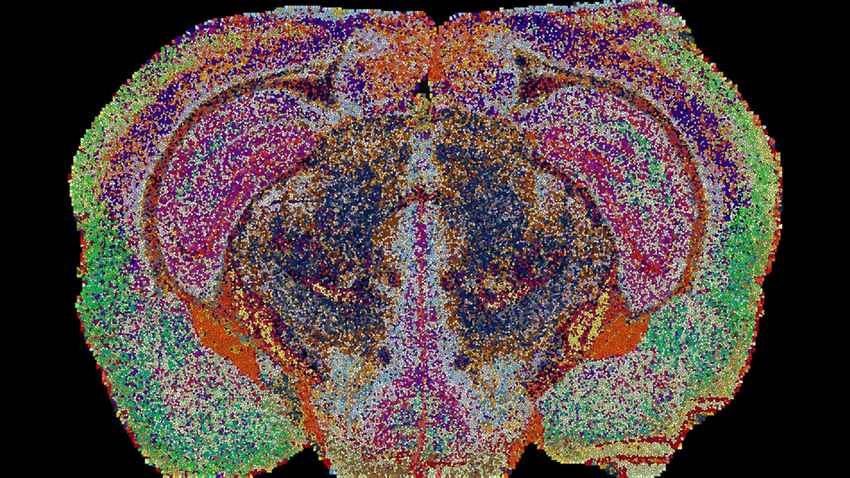
Researchers at the Swiss Federal Institute of Technology Lausanne (EPFL) have created a detailed map of lipid distribution in the mouse brain, known as the Lipid Brain Atlas. Using mass spectrometry and machine learning, they analyzed 172 distinct lipids across 109 brain sections from 11 mice, conducting approximately 7 million measurements. As a result, specialists identified 539 chemically distinct zones, which they termed "lipizones." It turned out that lipids, akin to unique postal codes, assign the same chemical address to distant yet interconnected regions.
The study also revealed surprising data regarding pregnancy. Substantial shifts in lipid composition were observed in pregnant mice, significantly exceeding the conventional differences found between male and female mice. Particularly pronounced changes occurred in the cerebral cortex, while levels of galactosylceramide—a vital component of myelin—surged in the white matter. This demonstrates that during pregnancy, the brain rewires its functionality to adapt to the body's changing demands.


The resulting atlas is openly accessible online and will help advance the understanding of aging processes, as well as the underlying causes of depression and Alzheimer's disease.
Until now, neuroscience had largely focused on genes and proteins, while fats were viewed merely as a passive protective layer. This research shatters that stereotype. If distinct brain cells also communicate with one another through chemical lipid codes, approaches to treating neurodegenerative diseases must be fundamentally reconsidered.



At the same time, it should be kept in mind that this involves an animal model for now. A mouse brain map cannot be directly extrapolated to humans. Nevertheless, the methodology itself, which illustrates how pregnancy reorganizes neural connectivity, establishes a solid foundation for future research on the human brain.