




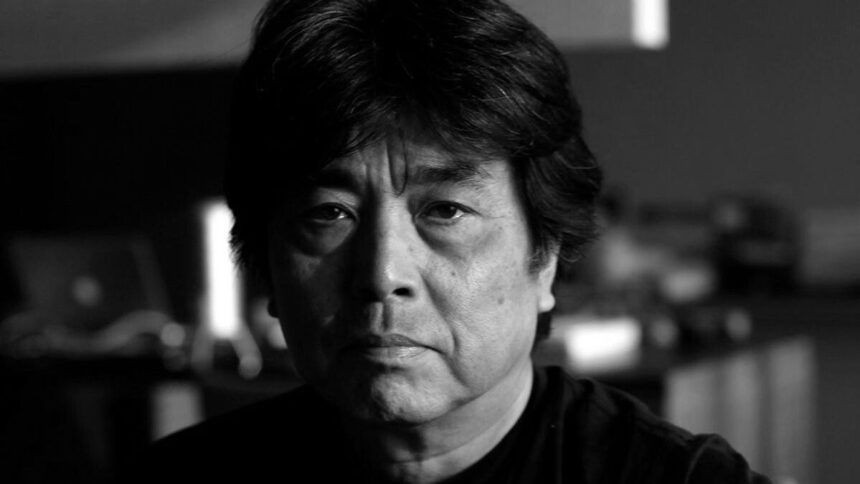
Japanese writer, screenwriter and film director Ryu Murakami has died at the age of 74. He passed away on October 17 at his home, and a joint statement about this was circulated on October 23 by the writer's office and the Gentoosha publishing house.
"Writer Ryu Murakami died on October 17, 2026, at his home. He was 74 years old," the statement said. The funeral has already taken place in a family circle, and the cause of death is not mentioned in the statement.
Murakami was born in 1952 in the city of Sasebo in Nagasaki Prefecture, Japan. He gained literary recognition in 1976 with the novel "Almost Transparent Blue," written during his student years, which won the Gunzo and Akutagawa prizes for literary newcomers. The book, which tells about young people living near a US military base, sold around 3.5 million copies.
His well-known works also include the novels "Coin Locker Babies," "In the Miso Soup," "Audition" and "Piercing." Social alienation, violence and the contradictions of modern society occupy a key place in Murakami's prose, and director Takashi Miike made a film of the same name based on his novel "Audition" in 1999.
Murakami was also involved in film directing and for about 20 years hosted the economic interview television program "Cambrian Palace." According to the publishing house, his last novel is "YouTuber," published in 2023.
Perhaps the most noteworthy thing about the statement on Murakami's death is what is absent: the cause. The family funeral also shows that his relatives wanted to stay away from unnecessary fuss, which is a fairly common approach in Japanese culture.


His creative path is also interesting: in addition to literature, he worked in film and hosted a television program for two decades. Such versatility is rarely encountered, and it is precisely this that gave his prose the particular resonance for which he is recognized by a wide circle of readers.
His books' main themes—alienation, violence and the contradictions of modern society—remain relevant today. It is still too early to say how his departure will affect contemporary Japanese literature, but the legacy he left is already significant.