



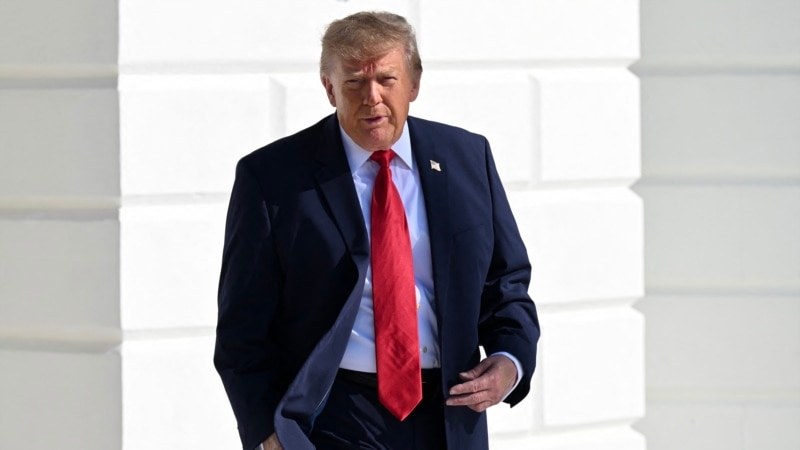
Donald Trump has announced that a meeting between Russian and Ukrainian presidents Vladimir Putin and Volodymyr Zelensky will take place "very soon." The US president, however, did not specify where and when the meeting would be held, saying only that there is major progress in resolving the Ukrainian conflict. "I think we're making tremendous progress with Russia and Ukraine. The meeting will take place very soon. I think there's tremendous progress," Trump said. Kyiv and Moscow have not yet commented on the statement, while the Kremlin has consistently insisted that a meeting at the leaders' level must be prepared and have a clear purpose and concrete outcome.
One day before Trump's statement, Finnish President Alexander Stubb and Norwegian Prime Minister Jonas Gahr Støre had spoken by phone with Putin, discussing the cessation of the war in Ukraine. After the conversation, Stubb said that "the discussion was frank and substantive." "We are neighbors of Russia. The outcome of this war will have a direct impact on our and broader European security. Ending the war requires direct discussions," the Finnish president said. After Putin, the Nordic leaders also spoke with Zelensky and presented the details of the conversation.
As a result of Washington's mediation efforts, Moscow and Kyiv had agreed last week to resume meetings of technical teams in a trilateral format. Moscow later announced that the negotiations are scheduled for the first half of November in Abu Dhabi, and Putin had said that the purpose of those contacts is to discuss how the security of Ukraine and Russia will be ensured after a peace agreement is signed. In his evening address, Zelensky said that representatives of Europe must also participate in the trilateral meetings. "It is important that Europe also participates in all diplomatic efforts. Ukraine has always insisted that Europe must be present and have its say in decision-making. And this applies to all of Europe," Zelensky said.
The Oleshky case shows how thin the line is where humanitarian issues can overtake the military agenda. The ceasefire brokered through Melania Trump's mediation technically addresses food, medicine, and demining issues, but does not eliminate the reality that the city remains on the line of military operations.
It is noteworthy that the evacuation date—October 30—falls precisely in the period when trilateral technical negotiations are scheduled in Abu Dhabi. The two processes run in parallel but are not dependent on each other, and this in itself speaks to the existing diplomatic architecture—humanitarian steps often live on their own timetable.
The question of who will guarantee the maintenance of the ceasefire in the city remains unanswered, while strikes continue simultaneously in Kharkiv and Tula Oblast. Without such guarantees, the Oleshky model is unlikely to become a broadly applicable formula.