




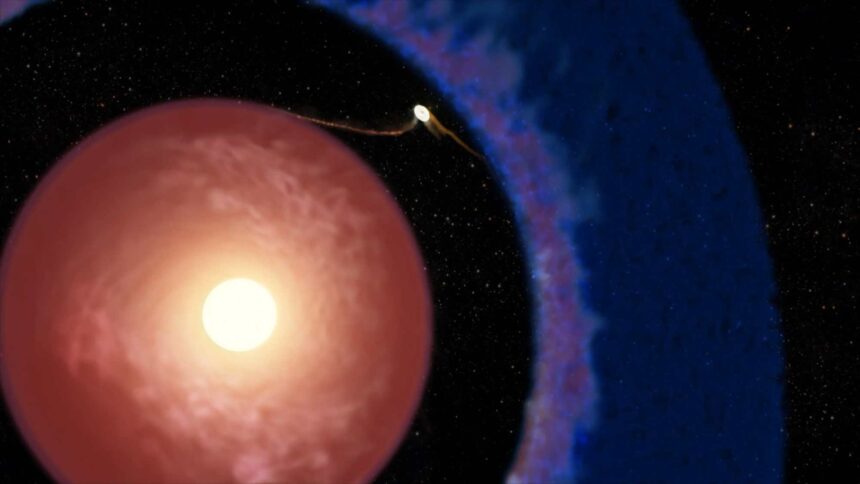
Astronomers have discovered the youngest exoplanet in history, named the "newborn" Elias 2-24 b, located 450 light-years from Earth and still hidden within the swirling clouds of gas and dust of its birth. Roughly the size of Jupiter, this giant planet is considered the youngest world ever detected, with experts estimating its age at less than one million years. This discovery leads scientists to conclude that our current best models of planet formation still miss several key processes, requiring a deep overhaul and additional studies.
Through the analysis of accumulated archival data, researchers confirmed assumptions that had previously arisen from observations made with other telescopes. Astronomers were able to find this planet through a breakthrough method, as it is located in a gap within the disk of material surrounding the star. The discovery of a planet at such an early stage grants researchers a unique opportunity to study the early developmental phases of planetary formation, which until now was nearly inaccessible due to the limitations of modern equipment.
The discovery of this newborn planet poses a serious challenge to modern astronomical theories, as existing models simply did not predict a developmental course at such an early stage. Astronomers will now be forced to revise their understanding of planet formation mechanisms in light of the new data obtained.
This process clearly demonstrates what a major role analyses of old archival data with new technologies can play. The upcoming launch of future space missions will make it possible to significantly expand the scope of research into similar distant worlds.