


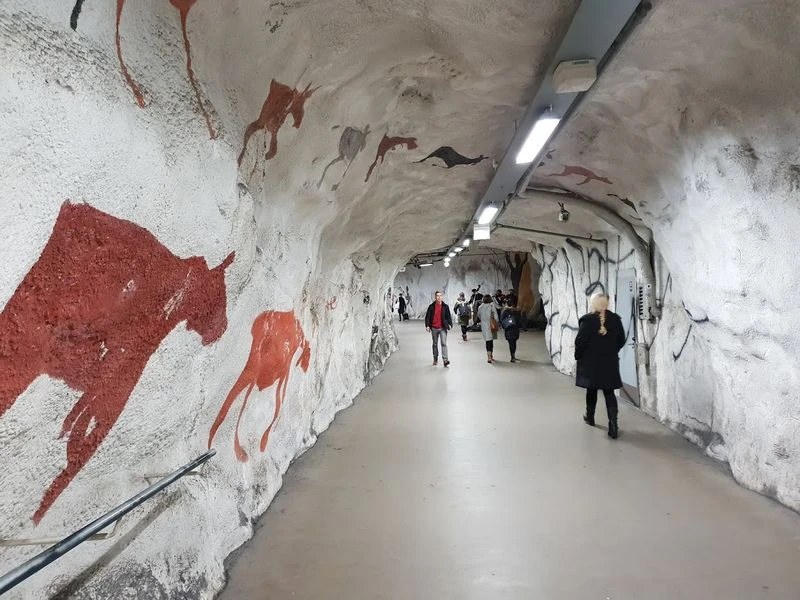
Beneath the saunas and cafes of Helsinki’s streets lies a secret "second city." It lies dormant, waiting for potential disasters, News.am reports. There are more than 5,500 shelters carved into the bedrock of the Finnish capital. They can accommodate nearly one million people, which is well above the city's population of 675,000.
Finland has been building bunkers since 1939. Since 1954, a law has mandated that any building larger than 1,200 square meters must include a bomb shelter. The Meri-Haka shelter is one of the largest; it sits 25 meters underground and has a volume of 71,000 cubic meters. In peacetime, it serves as a gym and a playground. In an emergency, the facility can be converted into a shelter within 72 hours, capable of housing 6,000 people. Airtight doors provide protection against explosions, as well as chemical and nuclear weapons.
Jukka-Pekka Schroderus, a representative of Finland's rescue services, warns that closing the entrances is a brutal choice, as some people may inevitably be left outside. There are approximately 50,500 bunkers across the country. These include facilities like swimming pools, go-kart tracks, and even churches. Residents are required to have their own food, water, and medicine to survive for 72 hours.
Finland's experience has captured global attention. Foreign officials and business representatives, including those from Saudi Aramco, are studying this system. Resilience Center Finland reports that defense sector exports generate tens of billions of euros. Finnish companies are building bunkers in Germany, Poland, and the Middle East. Juha Simola, director of the company Temet, notes that they are already establishing a factory in the United Arab Emirates. In the near future, the majority of the company's revenue is expected to come from exports.