


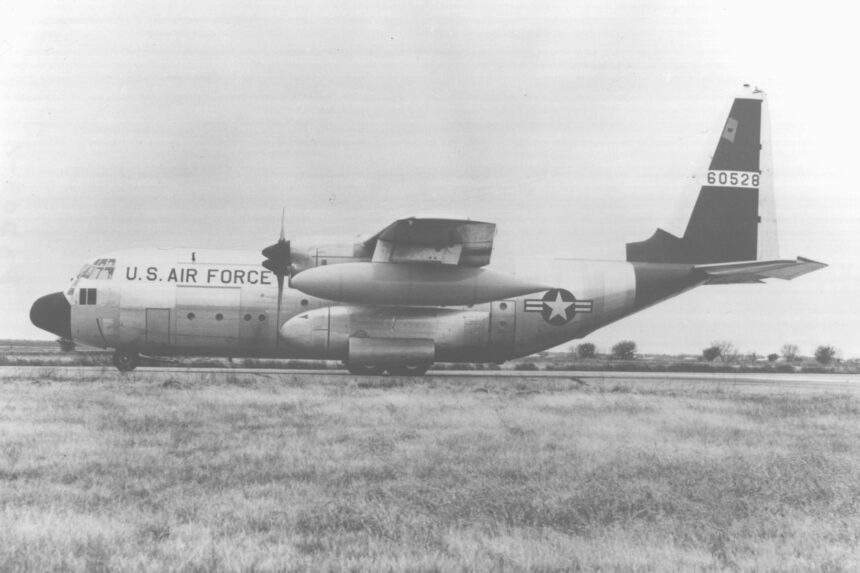
On September 2, 1958, an American C-130A-II reconnaissance aircraft that crossed the Armenian-Turkish border became the victim of one of the most tragic incidents of the Cold War. The plane, which took off from the Incirlik Air Base in Turkey and was designed for electronic intelligence, was supposed to conduct flights along the USSR borders while maintaining a safe distance. However, at 16:06 Yerevan time, for reasons that remain unclear, it crossed the border near Leninakan, after which Soviet MiG-17 fighters identified it as an "intruder" and destroyed it in mid-air.
The crash occurred at 16:14 near the village of Sasnashen, resulting in the death of all 17 Americans on board. The Soviet authorities denied the incident for a long time, claiming they had no information about the plane, but the US managed to intercept the Soviet pilots' communication, where the phrase "target destroyed" was clearly heard. It was only decades later, in 1993, after Armenia's independence, that it became possible to carry out search operations and discover the remains of the victims, which were later transported to the US.
This case demonstrates the relentless tension that prevailed between the superpowers, where even potential deviations of radio beacons could become fatal for intelligence crews. The actions of the Soviet fighters were aimed not only at defending the border but also at sending a clear signal to the West. Interestingly, years later, Armenian-American cooperation in the same area developed through charitable and educational programs, and a khachkar (cross-stone) erected at the crash site remains as a memorial to that tragic day. Today, it is difficult to assess whether the sides could have avoided this clash if communication and navigation systems had been more advanced, but the history remains documented as one of the dark and complex episodes of the Cold War.
This episode of the Cold War once again reminds us that reconnaissance flights carried not only technical but also immense political risks. The truth, hidden for decades and finally revealed through declassified documents, shows how the Soviet Union was prepared to destroy any target to protect its territorial security.

It is important to understand that even today, when all secrets seem to have been uncovered, issues of strategic importance remain at the heart of conflicts. The Sasnashen incident is not only a matter of historical memory but also a lesson on how quickly political tension can turn into real bloodshed.