



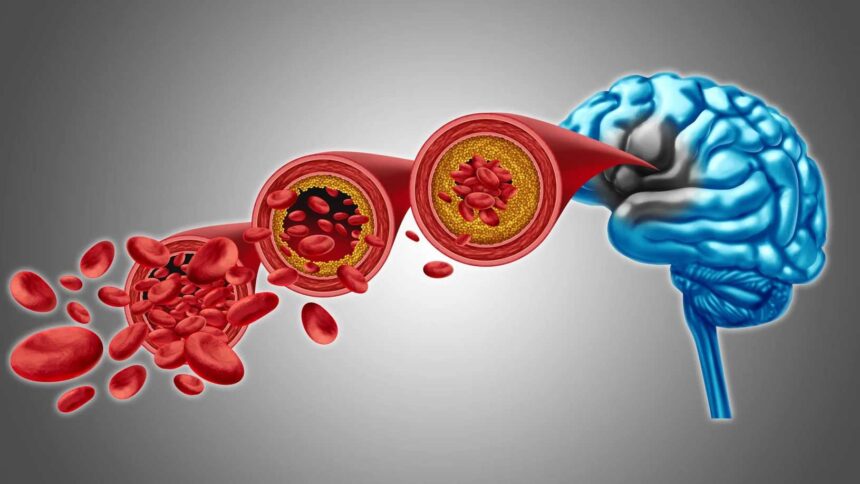
Scientists at the Robert Larner, M.D. College of Medicine at the University of Vermont have studied how blood flow in the brain is regulated and what role vascular dysfunction may play in some forms of dementia. The preclinical study found that restoring a specific phospholipid that is deficient in the blood may help regulate blood flow to the brain and ease dementia-related symptoms.
The researchers focused on the Piezo1 protein, which is located in the membranes of cells lining blood vessels and senses physical forces generated by blood flow. They found that in Alzheimer’s disease and similar conditions, Piezo1 activity in the brain’s blood vessels may be excessively high.
The scientists studied the phospholipid PIP2, which is involved in cellular signaling and the regulation of ion channels. They found that PIP2 normally limits Piezo1 activity, while reduced levels of PIP2 cause the protein to become overactive and disrupt normal blood flow in the brain.
When the researchers added PIP2 back, Piezo1 activity decreased and blood flow was restored. The findings point to a potential new treatment approach, although the research is still at the preclinical stage.
In further studies, scientists will need to determine exactly how PIP2 interacts with Piezo1 and how restoring PIP2 or directly targeting Piezo1 could be used in the treatment of dementia and other vascular disorders.
The most important limitation of the study is that the findings do not mean that a ready-to-use treatment is now available. The scientists have demonstrated a mechanism through which restoring PIP2 was able to reduce Piezo1 activity and restore blood flow, but this result still needs to be tested in further studies.


What is particularly interesting is that the research focuses not only on brain changes associated with dementia but also on the regulation of blood vessels. If further research confirms this link, restoring PIP2 or targeting Piezo1 could form the basis of a new treatment approach, but that possibility has yet to be established.