



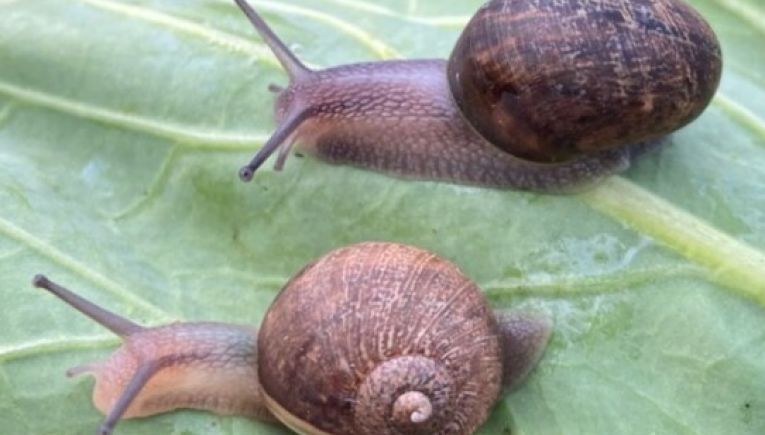
A molecule discovered during the dormancy of snails could open a new way to protect organs before transplantation. Researchers at the University of Alberta, led by Professor Evangelos Michelakis, identified a factor that induces a dormant state in snails and showed protective effects on mouse hearts in experiments.
The molecule was named SNAP, short for Snail Activator of PHLPP1. Scientists chemically synthesized it after discovering a factor in the “blood” of snails whose levels increased before they entered deep sleep and decreased before they woke up.
The research is based on the question of how nature protects tissues under extreme conditions. Animals that hibernate sharply reduce their metabolism and can withstand a lack of oxygen without severe damage. The human body is more vulnerable under such conditions, particularly to ischemia and reperfusion injury, which is also a major challenge in transplantation.
In experiments, SNAP induced a reversible state of inactivity in snails that resembled their natural dormancy. After the molecule was withdrawn, the animals returned to normal activity. Experiments on mouse cells showed that it limited damage, enhanced autophagy—the cellular cleaning process—and helped cells recover without signs of irreversible aging.
The results were even more striking in mouse hearts. Under conditions of ischemia and restored blood flow, SNAP protected heart cells, preserved mitochondrial function, reduced oxidative stress and supported energy production.
The researchers believe one possible application could be the preservation of organs intended for transplantation. In theory, SNAP could be added to the perfusion fluids used to preserve organs after they are removed from a donor and before they are implanted into a recipient.


The finding is interesting not only from the perspective of snail biology. During transplantation, the challenge is often the limited time in which a removed organ must be preserved and delivered to the recipient, so increasing cells’ resistance to temporary harsh conditions has practical significance. With SNAP, the researchers are trying to turn precisely this natural mechanism into a controllable pharmacological tool.
At the same time, the current findings do not mean that the molecule is ready for medical use. The experiments were conducted in snail and mouse models, while its safety and effectiveness in humans have yet to be established. This stage will determine whether the idea borrowed from nature becomes a practical transplantation technology or remains an intriguing biological discovery.