




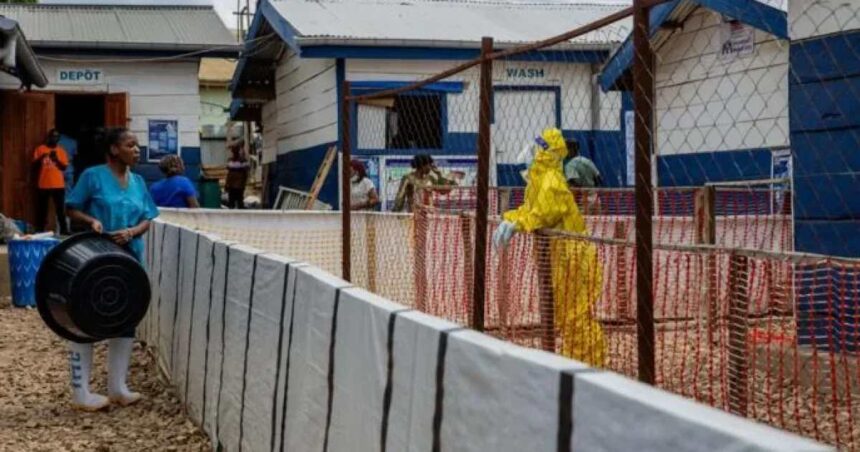
The Ebola outbreak in Africa is expanding, and the situation is becoming increasingly complex, particularly in the Democratic Republic of the Congo (DRC), where growing instability is hindering efforts to contain the spread of the disease.
The situation has become more complicated due to an increase in Ebola cases in Kenya, the spread of the disease to a new, eighth province in the DRC, and the confirmation of the first case in Nigeria. The outbreak is gradually affecting a wider area.
In the DRC, population displacement and humanitarian organizations’ limited ability to reach affected areas are further complicating the situation. These circumstances threaten efforts to control the spread of the disease and respond to the outbreak.
As of October 19, a total of 9,637 confirmed Ebola cases had been recorded across 66 health zones in eight provinces of the DRC, with 4,646 deaths. Since October 11 alone, 572 new confirmed cases and 265 deaths have been reported.

The spread of the Ebola outbreak shows that combating the disease depends not only on medical interventions but also on the ability to reach affected areas and monitor the population. When people are forced to leave their homes and humanitarian organizations struggle to access certain areas, it becomes more difficult to determine the extent of the disease's spread and respond quickly to new cases.
The number of cases and deaths recorded in the DRC highlights the severity of the outbreak, but these figures do not fully reflect the regional situation, as cases have also been confirmed in Kenya and Nigeria. As developments unfold, it is important to monitor not only the number of new cases but also the extent to which healthcare institutions and humanitarian organizations can reach affected populations.