




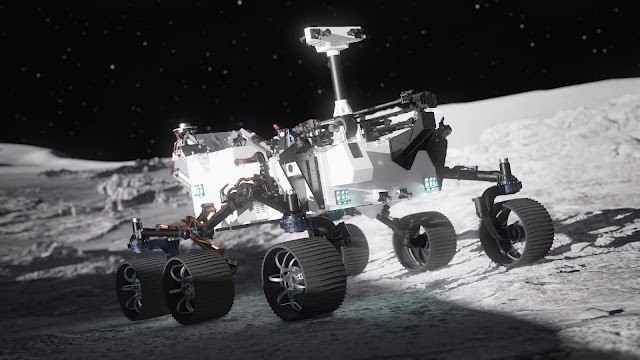
NASA plans to send a six-wheeled PROMISE lunar rover powered by a nuclear energy source to the Moon’s south pole in late 2028, the US space agency has announced.
“We are building a lunar base one mission at a time. By the time our astronauts return to the Moon, the first elements of the base will already be on the lunar surface,” NASA Administrator Jared Isaacman said.
PROMISE will study the lunar surface and soil, assess potential resources, and collect data to help select future landing sites. Its nuclear power source will allow the rover to operate during prolonged lunar nights and in shadowed regions where ice may be present.
According to NASA, the rover will be equipped with a drill capable of collecting soil samples from depths of about one meter, spectrometers, temperature and radiation sensors, and cameras. The mission is designed to last 18 months.
The Jet Propulsion Laboratory (JPL) will be responsible for assembling the rover and managing the mission. Spare flight components and engineering models from the Curiosity and Perseverance Mars rovers will be used to build PROMISE.
The PROMISE mission shows that NASA’s lunar program is gradually shifting its focus beyond returning humans to the Moon toward building the infrastructure needed for a long-term presence. The rover is expected to study areas in advance where astronauts may eventually work.



Exploring shadowed regions is particularly important. If the presence of ice there is confirmed, it could expand the possibilities for future lunar missions. However, this will first require data collected directly on the surface. PROMISE’s 18-month mission is specifically aimed at gathering this information.
Another notable aspect is the approach to building the rover. NASA plans to reuse spare components and engineering models from previously developed Mars rovers. This will allow the agency to combine experience gained from earlier missions with solutions to new challenges.