




U.S. President Donald Trump has said he may soon have to “destroy” the parts of Iran that have not been affected by military operations carried out against the country in recent months.
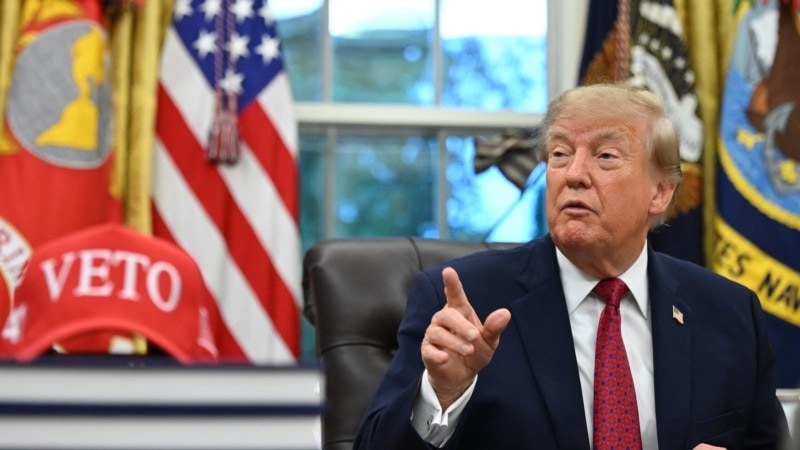
Answering reporters’ questions at the White House, Trump said Tehran would need about 25 years to rebuild its nuclear facilities following the strikes. “I would prefer not to destroy the rest of the country, if possible, but I may have to do it. You’ll find out soon,” he said.
The U.S. president also insisted that Iran cannot take any steps regarding its nuclear program without Washington’s approval. “They don’t do anything without our approval,” Trump said in the Oval Office, responding to a question about mediators’ proposals concerning the future of Iran’s nuclear program.
Iran has sent proposals on its nuclear program to the United States through Qatar, a mediator. The proposals are to be discussed only after Washington fulfills Tehran’s seven demands. The United States is currently reviewing them.
Iran’s demands include a complete halt to military operations not only between Iran and the United States but also in Lebanon, as well as the lifting of the U.S. naval blockade of Iranian ports and the removal of American sanctions.
Tehran is also demanding the unfreezing of its assets held abroad, a reduction in the U.S. military presence in the region, compensation for damage caused by the war, and an end to American attacks on Iranian territory.



Trump’s statement illustrates how far the conflict between Washington and Tehran could escalate if the two sides fail to reach an agreement. The U.S. president is simultaneously discussing the lengthy timeline for rebuilding Iran’s nuclear program and the possibility of launching further strikes against the rest of the country. Together, these two messages suggest that military pressure remains an important tool in the negotiations.
Iran’s proposals and demands show that the negotiations are not limited to its nuclear program. Tehran also wants to discuss sanctions, military presence, and the consequences of the war, while Washington is still reviewing the proposals it has received. The main question now is whether the two sides can reach an agreement on these different issues or whether negotiations will continue under the threat of military action.