



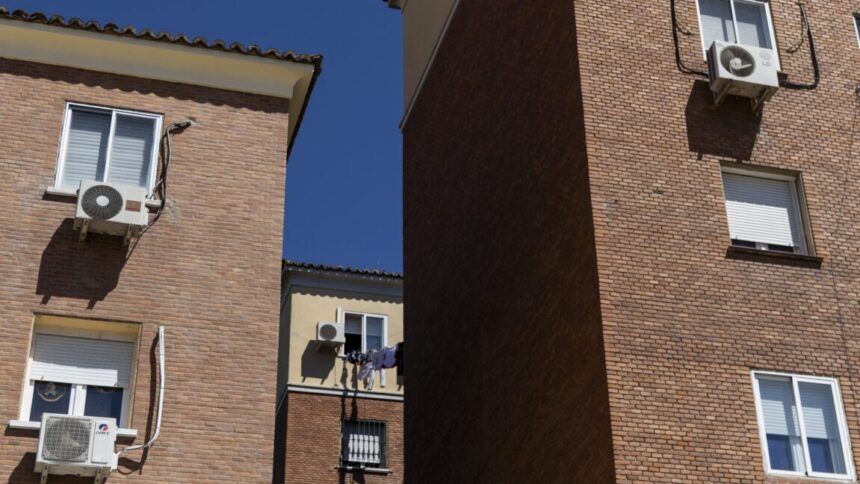
Frequent heatwaves across Europe are driving a mass surge in air conditioner purchases. In June, with temperatures soaring above 40 degrees Celsius, units sold out in French stores in a matter of seconds. The International Energy Agency predicts that by 2050, two-thirds of households will own an air conditioner.
Politicians often turn air conditioning into a tool of political struggle. On one hand, the right promises to make them more accessible, while on the other, the left fears they will remain available only to the wealthy. Currently, only 20 percent of Europeans have air conditioning, compared to 90 percent in the US.
Air conditioners help maintain productivity and even save lives. In 2019, they prevented approximately 200,000 premature deaths among people over 65. However, conventional units increase energy consumption and contribute to global warming. The electricity they consume already accounts for 3 percent of global emissions.
Existing air conditioners operate using refrigerants that are often harmful to the environment. The European Union has already restricted their use. Scientists are attempting to find alternatives, such as solid-state cooling. By stretching and compressing nickel-titanium alloys, it is possible to achieve a cooling effect without the use of dangerous gases.
Researchers in Germany and Ireland are working on such prototypes. There are also technologies utilizing magnetic fields or plastic crystals. These innovations are still in the testing phase, but they could radically transform the industry.
Experts recommend prioritizing building cooling through trees, shade, and natural ventilation. The example of Paris shows that district cooling networks using river water can also be effective. Policymakers will have to adapt to this new reality.