



The U.S. government has doubled the funding for the “TRIPP+” entrepreneurial fund, increasing it from an initial $201 million to $402 million. This adjustment was recorded on the official U.S. government spending platform, USAspending.gov, which clearly designates Armenia as the primary location for the project’s implementation.
These financial resources are intended for the development of transport routes passing through southern Armenia as part of the “TRIPP” (Trump Route for International Peace and Prosperity) connectivity initiative. The goal is clear: to connect the South Caucasus to the Trans-Caspian Corridor. The grant agreement, signed on January 30, is set to run until the end of 2036. The amendment made on July 16 doubled the commitment without changing the project's timeline.
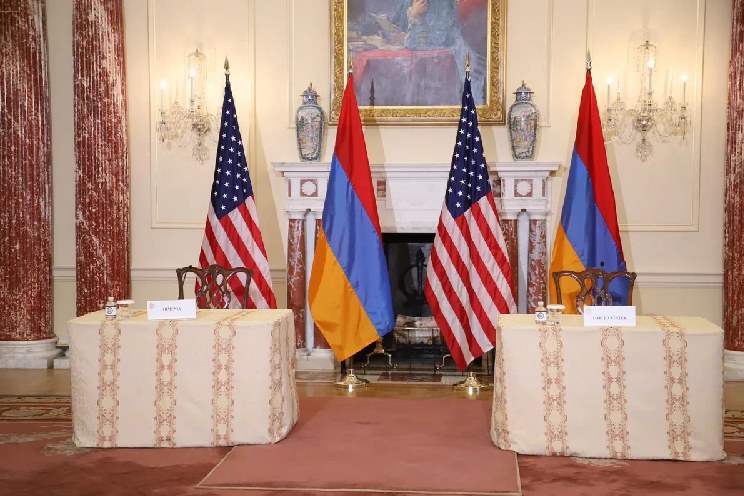
TRIPP+ and the TRIPP development company are distinct entities. While the former is an investment fund led by Konstantin Sokolov, the latter is responsible for the direct construction and supervision of infrastructure. The latter is expected to operate under the auspices of the U.S. International Development Finance Corporation (DFC). Armenia holds a 26 percent stake in the company, while the United States holds 74 percent. This project was launched in January, shortly after a meeting between Ararat Mirzoyan and Marco Rubio. This move by Washington signals a clear desire to increase economic influence and engagement in the South Caucasus.
Doubling a financial commitment of this scale by the U.S. for transport routes in southern Armenia essentially signals serious ambitions to reshape the regional logistics map. This is no longer merely a technical grant, but a long-term geopolitical investment aimed at bypassing certain regional isolations via the Trans-Caspian Corridor.

It is noteworthy that the funding increase occurs while the project timeline remains unchanged. This may imply a need to accelerate work or address additional infrastructure challenges. In the coming months, the focus will be not only on the construction process but also on how cooperation develops within the company established with the 26/74 ownership ratio between the U.S. and Armenia.