




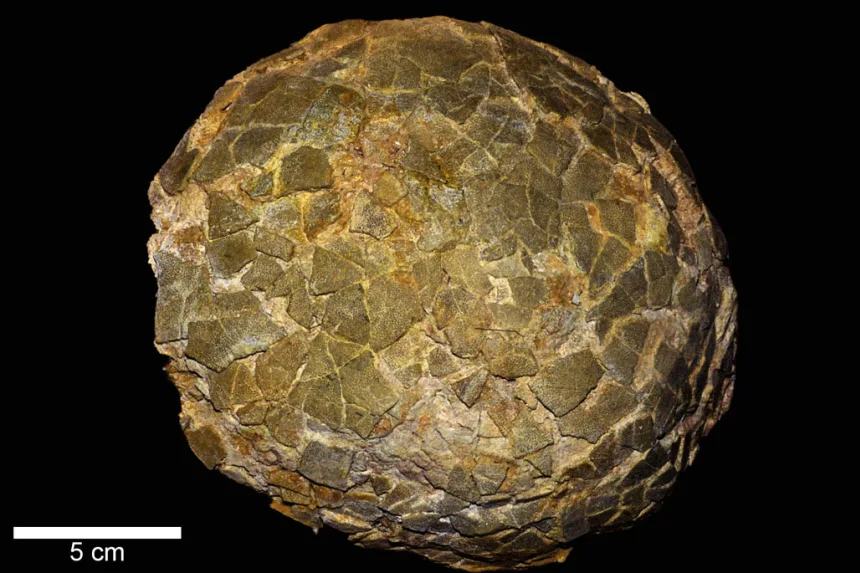
Scientists in southern Argentina have discovered fossilized eggs and shell fragments belonging to titanosaurs, indicating that these massive creatures were capable of breeding at high latitudes far from the equator. Over 250 shell remains, dating back approximately 68 million years, were found in an area north of the Strait of Magellan, which corresponded to a latitude of 55-60 degrees south during the dinosaur era.
According to the researchers' observations, titanosaurs likely buried their eggs in nests made of soil and vegetation. The decaying vegetation provided heat for the development of the eggs, while the soil helped maintain the necessary humidity. It is worth noting that titanosaurs are considered some of the largest creatures in Earth's history, with some weighing up to 75 tons.
This discovery significantly expands our understanding of the distribution range and biological adaptability of giant dinosaurs. When scientific data shows that even 75-ton giants were able to survive and reproduce in temperate or colder climatic conditions, it becomes clear that the Mesozoic era's fauna was much more resilient than previously believed. It remains to be determined whether such nesting habits were characteristic of all types of giants or if this was an adaptive mechanism specific to these individuals.
This discovery significantly expands our understanding of the distribution range and biological adaptability of giant dinosaurs. When scientific data shows that even 75-ton giants were able to survive and reproduce in temperate or colder climatic conditions, it becomes clear that the Mesozoic era's fauna was much more resilient than previously believed.

It remains to be determined whether such nesting habits were characteristic of all types of giants or if this was an adaptive mechanism specific to these individuals. We await further research to shed more light on this question.