



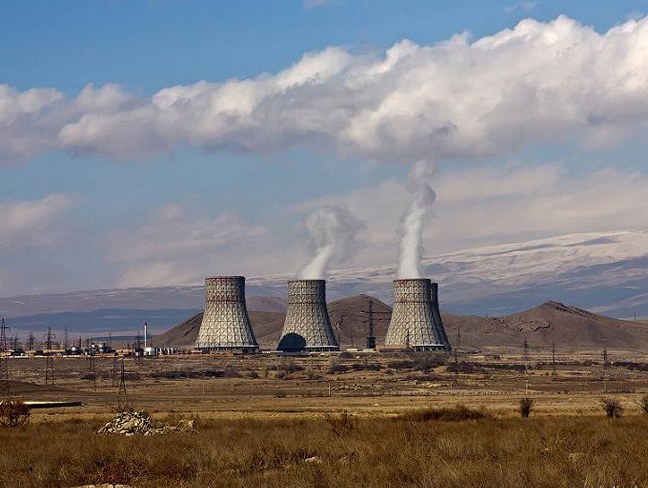
Rosatom has made a concrete proposal to the Armenian government to build a new nuclear power unit with a capacity of at least 1 GW, or 1,000 MW. According to the corporation’s Director General Alexey Likhachev, the issue was also discussed during meetings with Prime Minister Nikol Pashinyan and Deputy Prime Minister Mher Grigoryan, alongside the topic of extending the operating life of the existing nuclear power plant.
According to Likhachev, Armenia should decide on the technical specifications of the new plant and select its construction partners in the coming months. Rosatom is proposing its VVER-1000 project, which, according to the corporation’s assessment, meets Armenia’s projected energy system demand and deficit through 2040.
The corporation is also ready to implement the project with the participation of international suppliers. It was noted that companies from European Union and Asian countries could be involved in such cooperation, although no specific partners have been named yet. According to Likhachev, the proposed unit would have Generation III+ safety systems, and with a ten-year fuel supply, it could operate continuously as an “atomic battery.”
Rosatom also links the need for the proposal to the growth in electricity consumption. According to Likhachev, consumption in Armenia increased by 7 percent last year, and if it grows by 4 percent annually, a deficit of around 1 GW could emerge by 2036, taking into account the end of the Metsamor nuclear power plant’s operation.

The proposal for the new power unit is currently presented as one possible solution to Armenia’s long-term energy system needs, but the final decision remains with the Armenian government. The article notes that in the coming months, a decision will have to be made not only on the technical specifications but also on the group of partners that could participate in the project.
The calculation logic is also noteworthy: the proposed 1 GW capacity is linked to projected demand and the deficit through 2040, while an estimated potential deficit of around 1 GW is presented for 2036. At the same time, the article notes that electricity demand is currently growing, and this change is being used to substantiate the need for new capacity.