



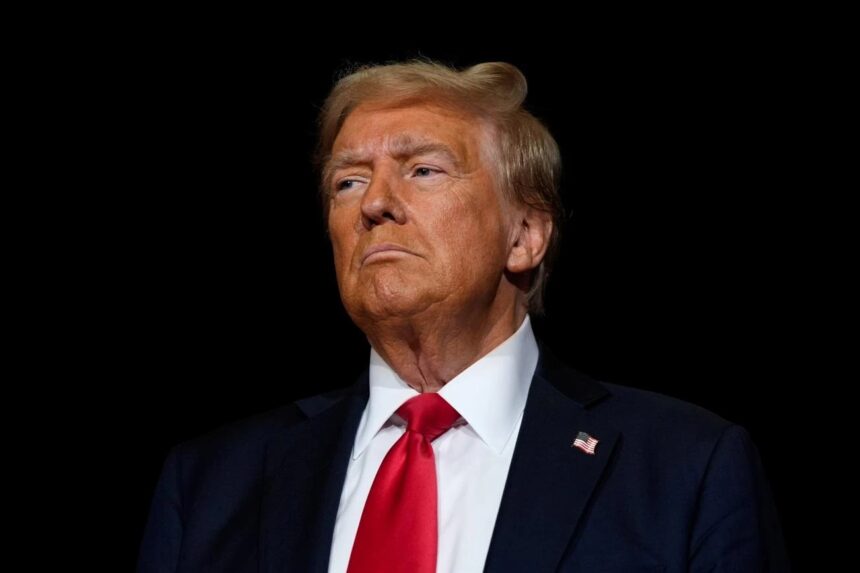
US President Donald Trump has said Washington is discussing the possibility of a new strike on Iran, and the timing could be as early as October 25. He told reporters this in Florida while at the same time not ruling out a major agreement with Tehran. The president made clear, however, that he does not intend to disclose the timing of a possible military operation.
"We're discussing it, and maybe as soon as tomorrow," Trump said on Saturday, October 24, when asked about the likelihood of a new attack. When reporters tried to clarify how close Washington was to a decision, he replied: "Do you really think I'm going to tell you that?"
According to Trump, the US could continue military operations to "finish what was started," or it could reach an agreement with Iran. At the same time, the American leader expressed doubt that Tehran would comply with the terms of a possible agreement.
"Maybe I'll have to finish what was started, or maybe they'll reach an agreement. But I'm not sure. In any case, we will win," the US president said.
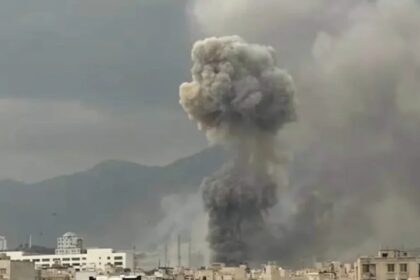
The day before, Trump had also not ruled out the possibility of a new military operation against Iran, calling it "another little 'Epic Fury'." That was the name of the US military campaign against Iran that began on February 28 as part of joint US-Israeli operations.
Trump's wording on October 24 is notable in that he speaks in the same breath about both a new strike and an agreement, without making either the main scenario. This is more a tool of pressure than a final decision: two messages are being sent to Tehran at once, and the choice is left to it. Also noteworthy is the president's open doubt that Iran will comply with the terms of a future deal. That in itself gives an insight into why he keeps the war and diplomacy options open simultaneously.

A striking detail is that Trump refused to even hint at a decision timeline, despite having himself mentioned October 25 as a possible date. This is a rare revelation of how little public information actually exists: we know only that the discussion is ongoing, and that "tomorrow" is also possible.
In the coming days, it is worth watching whether Washington continues the same dual rhetoric or takes concrete steps in the diplomatic direction. In the context of the military campaign underway since February 28, any new rhetoric directly affects the region's security calculations.