


Xiong'an is one of modern China's most ambitious urban development projects. The city is being built from scratch on desolate areas and wetlands, embodying the concept of a future "smart city" where digital technologies and nature coexist harmoniously. A journalist also visited this smart city.
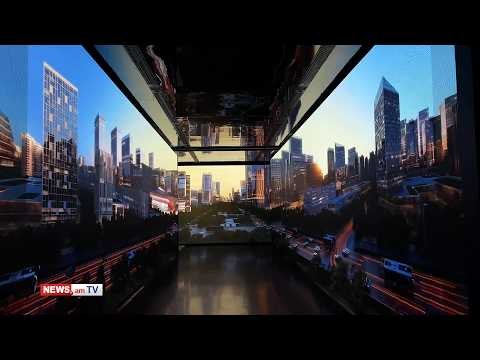
The introduction to the project begins at the Xiong'an Impression Exhibition Center. Huge interactive models and multimedia displays present in detail the city's master plan and development strategy, with particular attention to ecology and water resource management — including the Nanhe Water Conservancy Hub, which maintains the ecological balance and stable environment of the entire region.
The scale of the area's development is also evidenced by the Xiong'an Sports Center. This modern complex impresses with its architecture and variety of zones: in addition to workouts, one can test one's accuracy in interactive attractions, at the shooting range, and in archery.
A striking example of innovation in culture and education is the Xiong'an Library. It is a fully automated intellectual center where the very approach to working with information is changing. Smart terminals for automatic book lending and return are installed in the building, and there are also zones with educational games for children. Of particular interest is the robot assistant: it conducts live dialogue and surprises guests with its knowledge — for example, it can hold a conversation and share facts about Armenia.

The culmination of the visit to the city is the Xiong'an New Area Smart City Science and Innovation Center. This is the technological heart of Xiong'an, where latest-generation robots, intelligent unmanned transport, and leading digital management platforms are gathered. Xiong'an visibly demonstrates that the urban environment of the future is already becoming a reality today.
The true value of projects like Xiong'an is seen not in the shine of models and exhibition halls, but in how well people will live there. The plan displayed in the exhibition hall, the preservation of the water hub, or the automation of the library do not yet tell how the city will work when residents move in and everyday problems arise.



It is noteworthy that ecology and water resource management are presented as a central part of the project, not a secondary addition. If this approach is maintained in the next stages of construction, Xiong'an could become not only a technological showcase but a serious example of the question of how a city can be built in an underdeveloped area without losing the natural environment.
The rest remains open. It is unknown when the city will reach its planned population, how subsequent phases will be financed, and whether the digital management platforms will work as presented in the exhibition hall.